

Collect two or three itemized bids for every repair an inspector flags, log each one in a consistent format that captures scope, labor, materials, permits, and timeline, then add a contingency buffer before you turn that total into a negotiation number or credit request. Skipping any of those steps is how buyers end up either overpaying at closing or losing a repair credit they had every right to ask for.
TL;DR:
- Always itemize repair bids and confirm they match the inspector's exact scope before including them in negotiations.
- Record each estimate with detailed vendor information, supporting documents, and a built-in contingency buffer to prevent overpayment or missed credits.
- Normalize scope across bids by comparing line items, labor-to-material ratios, and permit costs, and obtain a third quote if bids vary sharply.
- Base negotiation requests mainly on must-fix repairs, adding a contingency of 10 to 20 percent, and present detailed, itemized credit requests.
- Use a consistent process of capturing on site, logging, comparing, and reconciling estimates to maintain clear records and leverage privacy during negotiations.
Table of Contents
- What to do the moment estimates start coming in
- Organize and record each estimate the right way
- How do you know if a repair quote is fair?
- Turning your estimates into a negotiation number
- Why contractor responsiveness matters more than you think
- A repeatable workflow you can copy for every listing
- A private tracker changes how negotiations actually go
- Keep every estimate in one private place with Nestnoted
- Sources
What to do the moment estimates start coming in
Estimates arrive in a rush, usually while you're also juggling financing deadlines and a second or third property tour. Handle them in order, before the details blur together.
- Match the estimate to the inspection report. Confirm the contractor addressed the exact item the inspector flagged, using comparable language, not a vaguer or narrower version of the problem.
- Confirm it's itemized. A one-line total with no breakdown of labor, materials, and permits isn't a quote you can compare or negotiate against.
- Record vendor details immediately. Note the company name, license number, insurance status, and how long it took them to respond to your first call or email.
- Upload everything. Save the PDF, any photos, and a note of the questions you still need answered before you'd accept the bid.
- Apply a contingency and set a target. Add your buffer percentage and mark what you'd actually ask for in negotiation, not just the raw estimate total.
Doing this within a day or two of receiving each estimate matters more than doing it perfectly. Buyers who wait until offer day to organize five contractor PDFs almost always miss a scope mismatch that a fresher read would have caught.
Organize and record each estimate the right way

A repair estimate is only useful if you can compare it against another one later, and that requires capturing the same fields every time, regardless of the contractor or the trade.
At minimum, record:
- Line-item description matching the inspection finding
- Urgency level (must-fix, should-fix, or cosmetic)
- Material cost and labor cost as separate figures
- Permit fees, if applicable
- Total price and any warranty terms offered
- Contractor name, license number, insurance carrier, and contact info
- Date the estimate was issued
Attach the contractor's PDF, the inspector's photo or report excerpt, and any follow-up notes directly to that entry rather than leaving them scattered across email threads and phone screenshots. This is one of the clearest cases where an itemized intake template pays off. Anchoring every bid to the same normalized scope means you're comparing apples to apples three weeks later, not guessing which "roof repair" quote covered flashing and which one didn't.
For projects under $5,000, a simple spreadsheet takes about 10 to 15 minutes a week to maintain and works fine. Once you're juggling several properties and multiple trades per property, that same spreadsheet gets unwieldy fast, which is where a dedicated system like NestNoted's private property tracking earns its keep: everything lives in one place, your agent can see the same record without you forwarding six emails, and nothing gets lost in a text thread from three weeks ago.
Pro Tip: Name each estimate file with the property address and repair type before uploading it. "Estimate.pdf" from three different contractors on three different houses becomes unusable within a week.
How do you know if a repair quote is fair?
Line up every bid against the same scope before you look at the bottom-line number. A $4,200 quote and a $6,800 quote for "electrical panel replacement" might not even be describing the same job.
Work through comparisons in this order:
- Normalize scope first. List what each contractor included, line by line, before comparing totals. A cheaper bid that skips permit fees isn't actually cheaper.
- Check the labor-to-materials ratio. A wildly skewed ratio compared to the other bids usually signals either an error or a contractor padding one category to hide a low bid elsewhere.
- Look for missing line items. Permits and disposal fees are the two most commonly dropped from a "too good to be true" estimate.
- Watch for red flags. Vague descriptions, an unusually low price with no explanation, no stated permit plan, or a demand for a large cash payment upfront should all push you toward a second opinion.
- Get a third bid when two disagree sharply. Quotes for identical scope can vary 30 to 50 percent for the same job in the same market, so a wide spread doesn't automatically mean one contractor is dishonest. It means you need a tiebreaker.
Specialist inspections are worth the extra cost when a general contractor's bid touches structural work, foundation issues, or anything involving old electrical or plumbing systems. A $300 specialist visit that catches a $9,000 miscalculation is not an expense. It's insurance.
Turning your estimates into a negotiation number
Once you have solid bids, the math is straightforward, but the judgment call around it isn't. Sort every inspection finding into Must-Fix, Should-Fix, and Nice-to-Have, then build your negotiation number almost entirely from the must-fix column, since sellers routinely reject requests that mix in cosmetic items.
- Apply a contingency of 10 to 20 percent on top of your must-fix total, leaning toward the higher end for older homes or repairs with a lot of unknowns behind a wall or under a slab.
- If must-fix costs eat up a large share of your negotiating room relative to the purchase price, decide now whether you'd rather ask for a credit or walk away, before you're mid-negotiation and rushed.
- Present an itemized credit request, not a single lump number. Sellers and their agents respond better to a documented list tied to actual estimates than to a round figure that looks negotiated out of thin air.
- If financing repairs after closing, compare a home equity line against a personal loan or credit card before assuming you'll pay cash. The mortgage documentation you're already assembling for the loan often streamlines a renovation loan application too.
Tracking discipline here isn't just about neatness. Buyers who document costs carefully and build in a contingency typically see overruns land around 10 to 20 percent, compared to 20 to 30 percent for those who wing it and estimate from memory. That gap is the difference between a repair fund that lasts and one that runs out in month four.
Why contractor responsiveness matters more than you think
How fast a contractor answers your first call is a genuine predictor of whether they'll show up on schedule once you're under contract. A contractor who takes four days to send a quote and never follows up on a question is not the one you want holding a repair deadline during your option period.
Before relying on any vendor for time-sensitive work, confirm:
- Active license and current insurance, verified independently rather than taken on their word
- Experience working around real estate closing timelines, not just standard renovation work
- At least one reference who can speak to whether they finished on the date promised
Record their response time and stated availability directly in your tracker next to the estimate. It becomes a reliability score you'll actually use when two bids are close on price. Buyers working against a tight closing timeline don't have room to discover a contractor's flakiness after the option period has already closed.
A repeatable workflow you can copy for every listing
The whole process breaks into four stages, and doing them the same way every time is what makes comparisons across properties possible instead of just comparisons within one property.
- Capture on tour. Photograph the issue, note the inspector's exact wording, and record the precise scope language a contractor will need to quote against.
- Quote intake. Log the date, contractor contact, itemized line items, and the uploaded PDF the moment a bid arrives.
- Compare. Normalize scope across bids and flag any mismatches before you trust a total.
- Negotiate and reconcile. Track any change orders against the original scope, and reconcile the final invoice against your estimate once the work is actually done.
This same four-stage habit works whether you're touring one house or juggling a property pipeline of a dozen active listings at once.
A private tracker changes how negotiations actually go
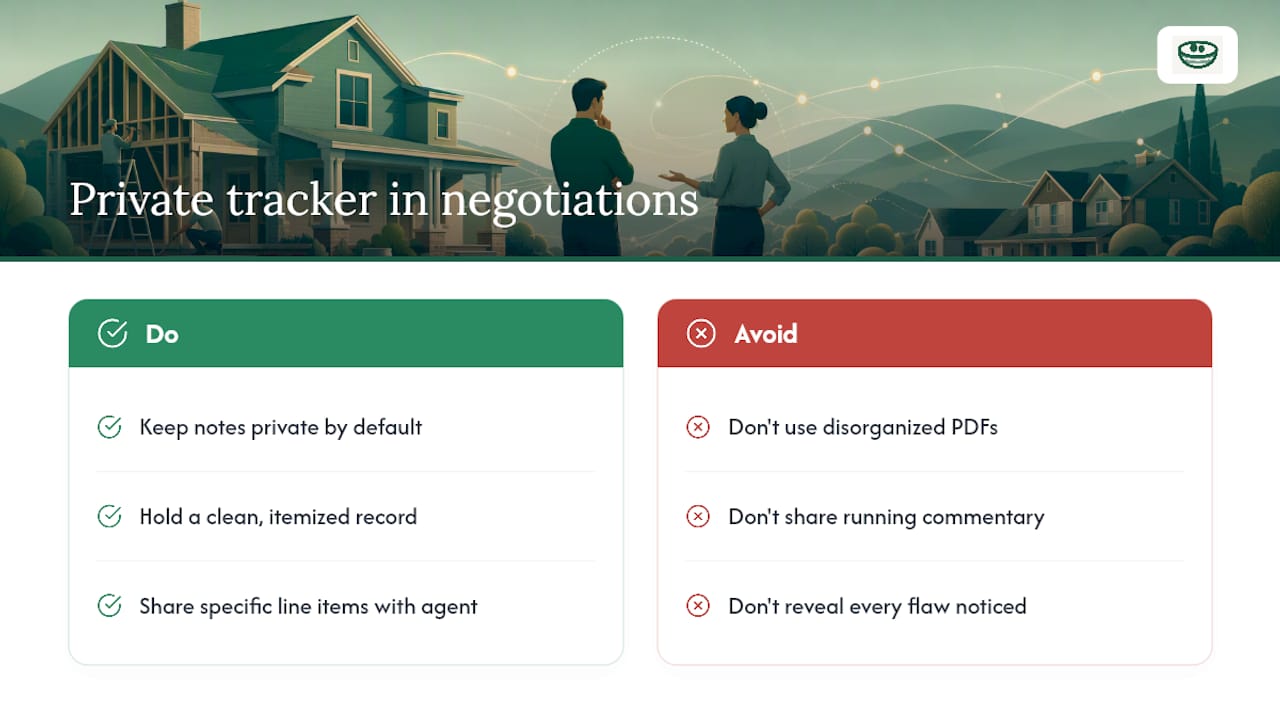
I've seen buyers walk into a repair negotiation with a folder of disorganized PDFs and watch the seller's agent poke holes in their numbers within minutes. The buyers who win that conversation are the ones holding a clean, itemized record, not the ones with the lowest quote.
Keep your notes private by default, especially early on. Share specific line items with your agent when you're ready to negotiate, not your running commentary on every flaw you noticed during the tour.
— Antony
Keep every estimate in one private place with Nestnoted
Nestnoted replaces the scattered folder of contractor PDFs and half-remembered phone calls with one private record per property. Every estimate you log carries its itemized fields, the attached PDF, vendor contact and license details, and your own private notes on how the bid stacked up.

Because the workspace is shareable on your terms, you can hand your agent the exact comparison view they need for negotiation without exposing every private note you jotted down mid-tour. That's the practical edge over a shared spreadsheet: your agent sees the numbers that matter, you keep the candid commentary. If you're touring multiple properties and juggling repair quotes on more than one at a time, a side-by-side comparison view also makes it obvious which listing has the cleaner repair picture before you commit to an offer.
Start a free account at Nestnoted and bring your next round of estimates into one place before your next tour.
Sources
- Home Repair Cost Tracking: Financial Tradeoffs | Gerald
- Cost to Fix Up a House Before Buying --- 2026 Home Buyer Guide | BuildCalc Pro
- Estimating Repair Costs: A Home Buyer's Guide to Smart Budgeting | Flipsmrt