

Yes, you can submit offers on more than one house at the same time in most markets, and no state or national ethics code bans it outright. The catch is bigger than most buyers realize: once a seller accepts, that offer becomes a binding contract, so making multiple offers only stays safe if you structure each one so you could actually close on it.
That means real proof of funds, financing you understand, and contingencies you'd actually use. Skip that groundwork and you're gambling with earnest money and your reputation with local agents.
- Treat every offer as a live contract, not a placeholder.
- Keep contingencies unless you can absorb the financial loss of waiving them.
- Line up separate earnest money for each offer before you submit.
Earnest deposits typically run 1% to 5% of the purchase price, and that money is at risk the moment you sign without a valid exit clause.
Key Takeaways
Making multiple offers is legal in most markets, but every offer becomes a binding risk the moment a seller accepts it, so structure each one so you could genuinely close.
| Point | Details |
|---|---|
| Treat every offer as binding | Only submit offers with financing and earnest money you could actually follow through on. |
| Earnest money is at stake | Deposits commonly run 1% to 5% of price and can be forfeited without a valid contingency. |
| Differentiate, don't duplicate | Vary price, closing date, and contingencies so each offer targets a different seller priority. |
| Withdraw immediately after choosing | Send written withdrawal on every other offer the same day you pick a winner. |
| Use NestNoted to stay organized | Track separate earnest deposits, compare offers side-by-side, and set withdrawal reminders in one private workspace. |
Table of Contents
- Legal and Ethical Checklist for Making Multiple Offers
- When Does a Multiple Offer Strategy Actually Make Sense?
- How Do You Submit Multiple Offers Safely?
- What Should You Change Between Multiple Offers?
- How Do You Talk to Your Agent About Multiple Offers?
- When Are Multiple Offers Too Risky to Make?
- How NestNoted Helps Buyers Manage Multiple Offers
- A Buyer-First Approach to Competing on Multiple Homes
- Keep Every Offer Organized Without Losing Your Mind
- Frequently Asked Questions
- Sources
Legal and Ethical Checklist for Making Multiple Offers
An accepted offer isn't a soft commitment. It's a contract, and in many states it carries good-faith and fair-dealing obligations that can expose you to a breach claim if you back out without a legitimate reason.
Money is the sharpest edge here. If you accept two offers and walk away from one without a covered contingency, you risk forfeiting that 1% to 5% earnest deposit as liquidated damages. Lenders complicate things further: multiple active contracts can shift your debt-to-income calculations and spook underwriters who see two financing contingencies tied to one buyer.
- An accepted offer is binding, not a hold.
- Good-faith obligations vary by state and can trigger legal exposure.
- Multiple live contracts can confuse lenders and slow underwriting.
- Sellers and other buyers notice bad behavior in small markets, and agents remember it.
Pro Tip: Ask your agent whether your state includes an attorney review period, often 3 to 5 business days, which gives you a penalty-free window to cancel after signing. Not every market has one, so confirm it in writing before you rely on it.
When Does a Multiple Offer Strategy Actually Make Sense?
Making multiple offers works best when the market and your finances line up. Run through this checklist before you commit to juggling more than one property.
Good conditions for multiple offers:
- Low inventory or active bidding wars where single offers routinely lose.
- You have separate cash reserves to cover more than one earnest deposit.
- You're fully pre-approved, or better, underwritten, not just prequalified.
- A hard deadline is forcing your hand, like a job relocation or lease expiration.
When to skip it:
- You only have enough liquid cash for one earnest deposit, not several.
- Your financing depends on selling your current home first.
- You're not willing to track and manage multiple sets of contingencies at once.
- Local sellers in your market strongly favor single, clean offers over buyers who appear to be shopping around.
Timing matters as much as the checklist. Stagger your submission and response deadlines by a day or two where possible, so you're not stuck making two simultaneous acceptance decisions. Treat multiple offers the way experienced negotiators treat parallel proposals in any competitive process: set a hard cap on how many you'll run at once, usually two or three, so you can actually manage the paperwork and deadlines without missing something that costs you money.
How Do You Submit Multiple Offers Safely?
Here's the sequence that keeps a multiple offer strategy from turning into a legal or financial mess.
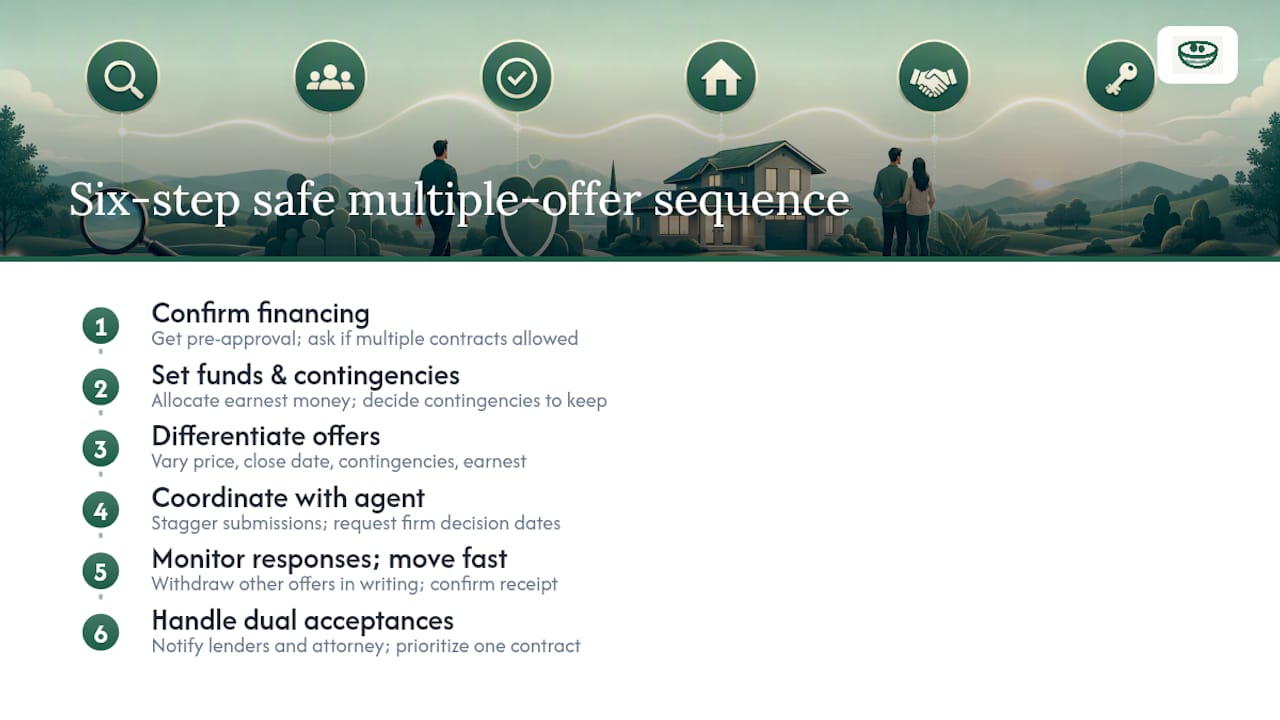
1. Confirm your financing first. Get fully pre-approved, or ideally underwritten, before you draft a single offer. Call your lender and ask directly whether they'll finance more than one active contract at a time. Some will, some won't, and finding out after acceptance is too late.
2. Set your funds and contingency plan. Decide how much earnest money you can allocate to each offer without touching money you need elsewhere. Map out which contingencies (inspection, appraisal, financing) you'll keep on every offer and which ones you might trim on your top pick.

3. Build differentiated offers, not copies. Vary price, closing date, contingency mix, or earnest amount so each offer speaks to a different seller's priorities. A relocating family might value a fast close; a seller staying in the home a bit longer might value a rent-back option.
4. Coordinate timing with your agent. Stagger your submission deadlines and, where appropriate, ask sellers for a firm decision date. Prepare your withdrawal language ahead of time so you're not drafting it under pressure once you've made a decision.
5. Monitor responses and move fast. The moment you settle on your preferred property, withdraw every other offer in writing immediately. This single habit does more to prevent accidental double acceptance than anything else in this process. Confirm the withdrawal was received; don't assume silence means it went through.
6. Get closing-ready if more than one gets accepted. If you somehow end up with two accepted contracts, notify both lenders and an attorney the same day. Prioritize the contract with financing and contingencies that best fit your actual situation, and formally exit the other as fast as your contract allows.
Picture a buyer relocating for a new job in six weeks. Two houses fit the timeline, and neither seller wants a long escrow. Submitting distinct offers, one with a faster close and one with a slightly higher price and a 21-day inspection window, gives that buyer two live paths instead of betting everything on one negotiation.
Pro Tip: Draft your withdrawal notice template before you submit your first offer, not after you need it. Having the language ready means you can act within minutes instead of scrambling to word an email while a seller is waiting on a signature.
What Should You Change Between Multiple Offers?
The real skill in a multiple offer strategy isn't submitting more paperwork. It's making each offer distinct enough that it competes on its own terms instead of triggering identical outcomes across the board.
- Earnest money amount: A higher deposit signals seriousness but raises what you stand to lose if you exit without a valid contingency.
- Inspection contingency: Waiving it can win a bidding war but leaves you exposed to costly surprises after closing.
- Appraisal contingency: Dropping it strengthens your offer in a hot market but means you cover any gap between price and appraised value yourself.
- Escalation clauses: These automatically raise your bid up to a cap when a competing offer appears, but running one on two properties simultaneously creates real double-acceptance risk if both sellers invoke it around the same time.
- Closing date and possession terms: Flexibility here, like offering a rent-back period, often matters more to a seller than an extra few thousand dollars.
- Personal buyer letter: A short, honest note about your plans for the home can tip a close decision, though some agents advise against it for fair-housing reasons.
Pro Tip: Keep contingencies intact on every offer except the one you'd genuinely walk away from something else to win. Waiving protection across the board multiplies your exposure the moment more than one seller says yes.
How Do You Talk to Your Agent About Multiple Offers?
Your agent needs to know exactly what you're doing, in what order, and why. Vague instructions are how offers get crossed or withdrawals get delayed.
Tell your agent plainly: "I'm submitting offers on 123 Maple and 456 Oak. If Maple is accepted first, withdraw Oak immediately in writing." Rank the properties out loud so there's no ambiguity about which one wins if both come through.
On the seller-facing side, transparency often works in your favor. A simple line through your agent, such as "the buyer has interest in another property and would appreciate a decision by Thursday," can prompt a faster answer without revealing your full hand.
Agent checklist:
- Confirm how and where each earnest deposit gets held.
- Verify contingency language matches what you actually intend to rely on.
- Draft withdrawal notices in advance for every active offer.
- Line up your attorney and lender contacts before you need them urgently.
- Confirm each seller's expected response window.
Pro Tip: Ask your agent to loop in the listing agent on your decision deadline rather than staying silent. Most listing agents respect a buyer who communicates a timeline over one who disappears after submitting a bid.
When Are Multiple Offers Too Risky to Make?
Some situations turn a multiple offer strategy from smart into reckless. Watch for these red flags before you submit a second or third offer.
- You can't cover more than one earnest deposit without draining your safety net.
- You're waiving every contingency across offers just to look competitive.
- Your financing depends on selling your current home, and that sale isn't final.
- Your market has strict good-faith contract enforcement and no attorney review period.
If two of your offers get accepted at once, act the same day: send written withdrawal on the property you're declining, notify both lenders immediately, and call a real estate attorney before you respond to either seller again.
Lenders can also refuse to move forward once they see you carrying multiple active purchase contracts, since it raises questions about which one you'll actually close on. That alone is reason enough to keep your offer count small and manageable.
How NestNoted Helps Buyers Manage Multiple Offers
Juggling two or three offers by memory, text threads, and scattered PDFs is how buyers miss a withdrawal deadline or lose track of which contingency applies where. NestNoted gives each property its own private record, so nothing gets crossed between offers.
- Log separate earnest-money amounts and deadlines for each property.
- Compare offers side-by-side, including contingencies and closing dates.
- Set decision-deadline reminders so withdrawal notices go out the same day you pick a winner.
- Keep your lender's and attorney's contact info attached to each listing.
Pro Tip: Use NestNoted's private notes to record what each listing agent tells you about seller priorities, whether it's a fast close or a longer rent-back. That detail is exactly what makes your next offer competitive instead of generic.
A Buyer-First Approach to Competing on Multiple Homes
Competing hard doesn't require cutting corners. The buyers who come out ahead are the ones who stay transparent with their agent, get real legal advice before waiving protections, and never sign an offer they couldn't actually honor.
The rule worth repeating: structure every offer so you could close on it tomorrow. That single habit protects your earnest money, your relationships with local agents, and your standing the next time you're back in a bidding war.
Keep Every Offer Organized Without Losing Your Mind
There are other ways to juggle multiple offers, a spreadsheet, a shared folder with your agent, a stack of sticky notes on your desk, but most of them fall apart the moment you're tracking three properties with three different deadlines. NestNoted gives you a private workspace built specifically for that chaos: one place to log each offer's terms, earnest money, and contingencies, side by side, with reminders before deadlines slip past you.
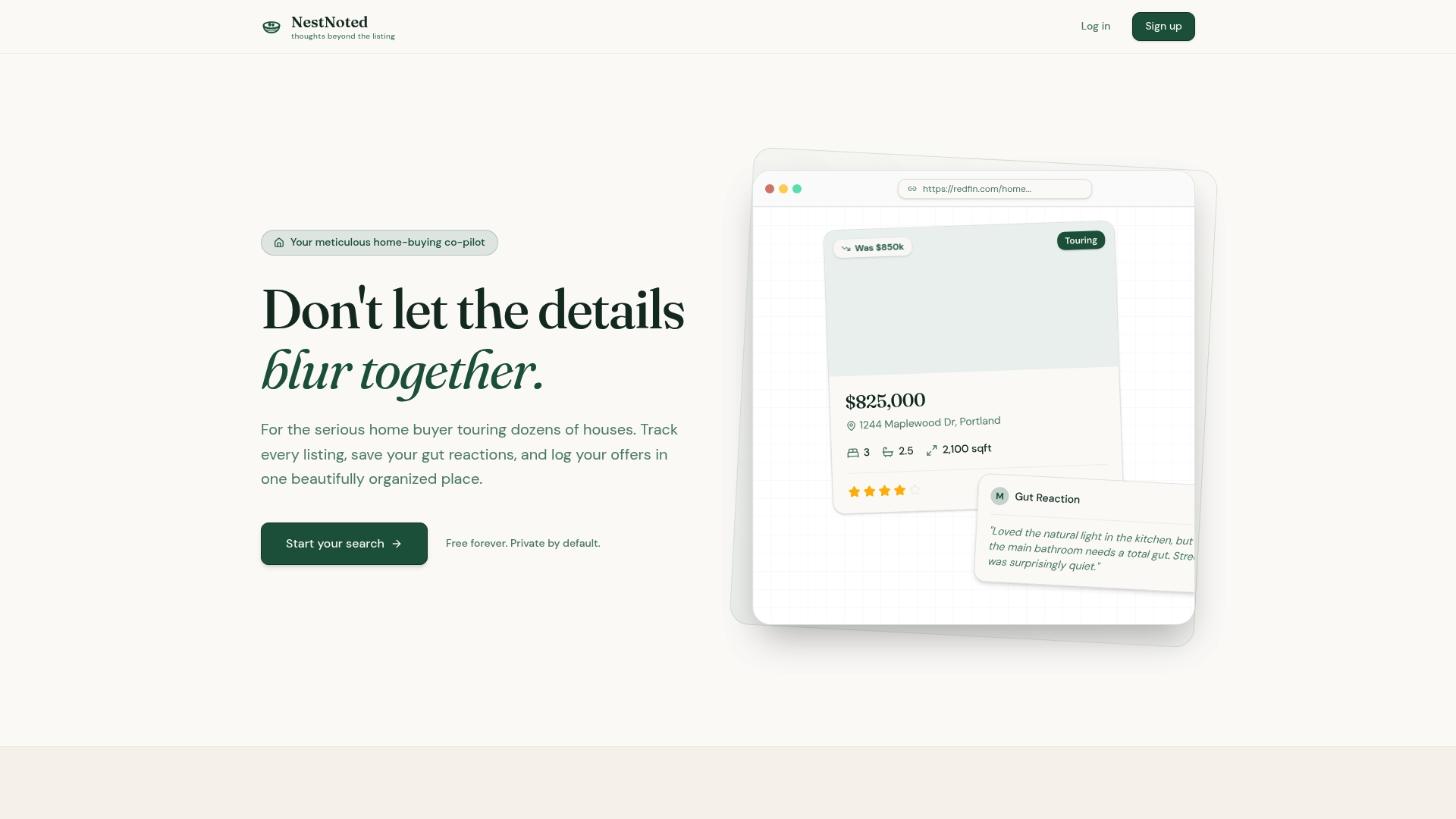
Every note stays private by default, so you can be honest about a property's flaws without worrying who sees it. When you're ready to compare your active offers and decide which one to pursue, the side-by-side comparison tool lays out price, terms, and timelines in one view. None of this replaces your agent or attorney, always confirm contract language and local rules with them directly, but it does mean you'll never lose track of a withdrawal deadline because it was buried in a text thread. Start a free account and add your first property today.
Frequently Asked Questions
Can you legally make offers on multiple houses at the same time? Yes, in most markets there's no law or industry rule against it. The risk starts once a seller accepts, since that offer becomes a binding contract you're expected to honor.
What happens if two sellers accept my offers on the same day? Notify both lenders and an attorney immediately, then formally withdraw the offer you're declining in writing. Acting the same day limits your exposure to lost earnest money and breach claims.
Do I lose my earnest money if I back out of one offer? You might, unless your withdrawal falls under a contingency you kept in the contract, like financing or inspection.
Should I tell sellers I'm making multiple offers? Many buyers find that a brief, honest note through their agent, mentioning interest elsewhere and requesting a decision deadline, works better than staying silent and risks less than looking evasive.
How many offers can I safely manage at once? Most buyers can realistically track two to three without missing a deadline or crossing contingency language. Beyond that, the paperwork and financing coordination usually outpace what one person can manage carefully.
This article is general information, not a substitute for advice from a qualified lawyer. Consult a qualified legal professional about your own circumstances before acting on anything here.
Sources
- Should You Put Offers On Multiple Houses? | Redfin
- Can You Make Offers On Multiple Houses at the Same Time? | Consumers Credit Union
- Can You Put Offers on Multiple Houses? Legal Risks - LegalClarity
- Multiple offers | National Association of REALTORS® (NAR)
Always confirm contract terms and local customs with a real estate attorney or your agent.