

Yes, long distance house hunting works, but only when you treat it as a managed process instead of hoping a few photos and good luck will get you to closing. Four things have to be in place before you start: mortgage pre-approval from a lender licensed in your target state, a buyer's agent experienced with remote clients, a layered virtual verification process for every listing, and a firm inspection contingency you never waive. The sections below break down each step, with templates you can use immediately.
TL;DR:
- Pre-approval with a licensed local lender supporting remote notarization is essential before starting your house hunt.
- A remote-buying team must include an experienced agent, a thorough inspector, a licensed lender supporting RON, and a local coordinator.
- Virtual tours and detailed live video inspections, including water pressure and noise checks, are critical for evaluating homes from afar.
- Never waive inspection contingencies; require photo/video reports and coordinated appraisals to protect against hidden issues.
- Organize your search with a private dashboard that logs listings, notes, inspections, and offers to maintain clarity across multiple states.
Table of Contents
- Quick Action Checklist To Start Long Distance House Hunting
- Who Do You Need On Your Remote Buying Team?
- How Do You Research Listings Efficiently From Far Away?
- What Should You Budget For A Long Distance Move?
- Planning A Trip: How Do You Make One Visit Count?
- Inspections And Appraisals: What Protects A Remote Buyer?
- Closing Remotely: How Do You Prevent Wire Fraud?
- How Do You Keep Your Remote Search Organized?
- What Do Remote Buyers Get Wrong Most Often?
- Try A Private Search Dashboard For Your Remote Search
- Where To Go For Official Guidance
- Sources
Quick Action Checklist To Start Long Distance House Hunting
Before you open a single listing, get these five steps in order. Skipping any one of them is how remote buyers end up overpaying for a house with a cracked foundation or a flooded basement they never saw.
- Get pre-approved with a lender licensed in the target state. Confirm they also support remote online notarization (RON), since not every lender or title company offers it.
- Hire a buyer's agent with real remote-client experience, not someone who just says they're "happy to do FaceTime." Ask for their video-walkthrough protocol upfront.
- Narrow neighborhoods using satellite maps, school ratings, and crime data before you ask an agent to schedule a single tour.
- Use virtual tours to cut your list down to finalists. Save actual travel time for the two or three homes that survive the video round.
- Require inspector-attended walkthroughs and keep every inspection contingency intact. Never waive it just to make an offer more competitive.
About three out of four remote buyers never set foot in their new home before move-in day, according to CalzaCo Real Estate Team. That works only because their local team does the legwork that would otherwise be theirs.
Who Do You Need On Your Remote Buying Team?
A long-distance purchase runs on four roles: agent, inspector, lender or title company, and a local coordinator. Each one needs a specific vetting question before you trust them with a six-figure decision made from a thousand miles away.
Interview your agent like a job candidate. Ask how many out-of-state closings they've handled in the last 12 to 24 months, what their video-walkthrough protocol actually looks like (live call, recorded tour, or both), and what hours they're realistically available for your time zone. A partner network like Stu Harvey Estates outlines how a structured out-of-state process typically unfolds, which is a useful benchmark when comparing agents.
Set clear expectations with your inspector before hiring one:
- Ask for a photo and video-backed report, not just a checklist with boxes ticked.
- Request a live phone or video debrief the same day, while the house is still fresh in their mind.
- Add a sewer scope and pest inspection if the home is older or you're buying sight unseen.
Verify your lender and title company do the same job everywhere. Confirm licensing through NMLS Consumer Access and ask directly whether they support RON or require an in-person signing.
Line up a local coordinator, even if it's a trusted friend or a paid concierge, for locksmith access, utility transfers, and a final walkthrough right before closing.
Pro Tip: Ask every local partner for one out-of-state client reference you can actually call. Agents who work remote buyers regularly will have one ready without hesitation.
How Do You Research Listings Efficiently From Far Away?
A 3D tour tells you more than photos, but it still can't tell you if the house smells like a wet basement or sits three feet from a freight line. Matterport and similar walkthroughs are a good first filter, not a final answer. Multiple relocation guides recommend a layered approach: 3D tour first, then a live agent-led video call for anything that survives the first cut, then a targeted inspector visit for finalists.
When you get your agent on a live video call, have them check specific things a photo will never show you:
- Water pressure in the kitchen and at least one bathroom
- Cell signal strength inside the house, not just on the porch
- Any smell the moment they walk in, especially near the basement or crawl space
- How thin the walls sound between rooms
Beyond the listing itself, pull up Google Street View and satellite imagery to see what's actually next door, not just what the listing photos crop out. Check the local planning department's site for pending zoning changes or new construction that could change the neighborhood in two years. Confirm school district boundaries directly with the district, since listing sites frequently get this wrong. And ask your agent for one video walkthrough during evening rush hour so you can judge street noise and traffic, not just the quiet Tuesday-morning tour every listing video defaults to. A home tour checklist built for live or virtual walkthroughs helps you standardize what you're checking, listing to listing.
What Should You Budget For A Long Distance Move?
Get pre-approved early, and make sure the lender is actually licensed in the state where you're buying, not just the state you're leaving. Some lenders can't originate loans across state lines, and finding that out mid-contract can blow your closing date.
- Long-distance moving costs vary widely by distance and home size, and quotes climb fast during peak moving season (late spring through summer), so book early if your timeline allows it.
- Build in extra days for document signing, especially if your title company needs to schedule RON separately from the closing appointment itself.
- Appraisals on out-of-area files sometimes take longer to schedule, since fewer appraisers cover certain rural or fast-growing markets.
- Get at least three written mover quotes and confirm each company's USDOT registration before signing anything.
None of this is exotic. It's just easy to forget when you're juggling a job search, a lease deadline, and a mortgage application at the same time.
Planning A Trip: How Do You Make One Visit Count?
If you can travel at all, use the trip to eliminate neighborhoods, not to fall in love with one house on day one. A single well-planned visit tends to accomplish more than three scattered ones, according to USA Today's reporting on cross-country buyers.
- Day one: Drive the commute at both rush hour and midday, visit the schools in person if you have kids, and walk the actual grocery store and pharmacy you'd use.
- Day two: Tour your top three finalists in person, back to back, so comparisons stay fresh.
- Day three: Meet your inspector on-site for the front-runner and walk the property together before you finalize an offer.
If travel isn't possible even once, your agent becomes your eyes. Insist on detailed video for every room, every closet, and the exterior from all four sides, not a highlight reel. An open house tracker format works well here, since it forces you to log the same details for every home whether you toured it in person or on a screen.
Inspections And Appraisals: What Protects A Remote Buyer?
Never waive the inspection. That single sentence has saved more remote buyers from disaster than any other piece of advice in this article. Buying sight unseen already removes one layer of protection; skipping the inspection removes the last one.
- Require a photo and video-backed report from your inspector, plus a live phone debrief the same day.
- Order a sewer scope, pest inspection, and roof inspection for any home you haven't walked through yourself.
- Use the inspection findings to negotiate repairs, a credit at closing, or an escrow holdback, and keep firm deadlines on every contingency.
- Coordinate appraisal timing directly with your lender, since out-of-area appraisals sometimes run a few days longer to schedule.
Military buyers offer a useful model here. Close to 40 percent of military home purchases in 2026 happen without the buyer walking through the front door first, according to PCS PIF, which describes strict live inspector debriefs and documented power-of-attorney limits as standard practice for that community. Civilian buyers can borrow that same discipline even without military-specific benefits.
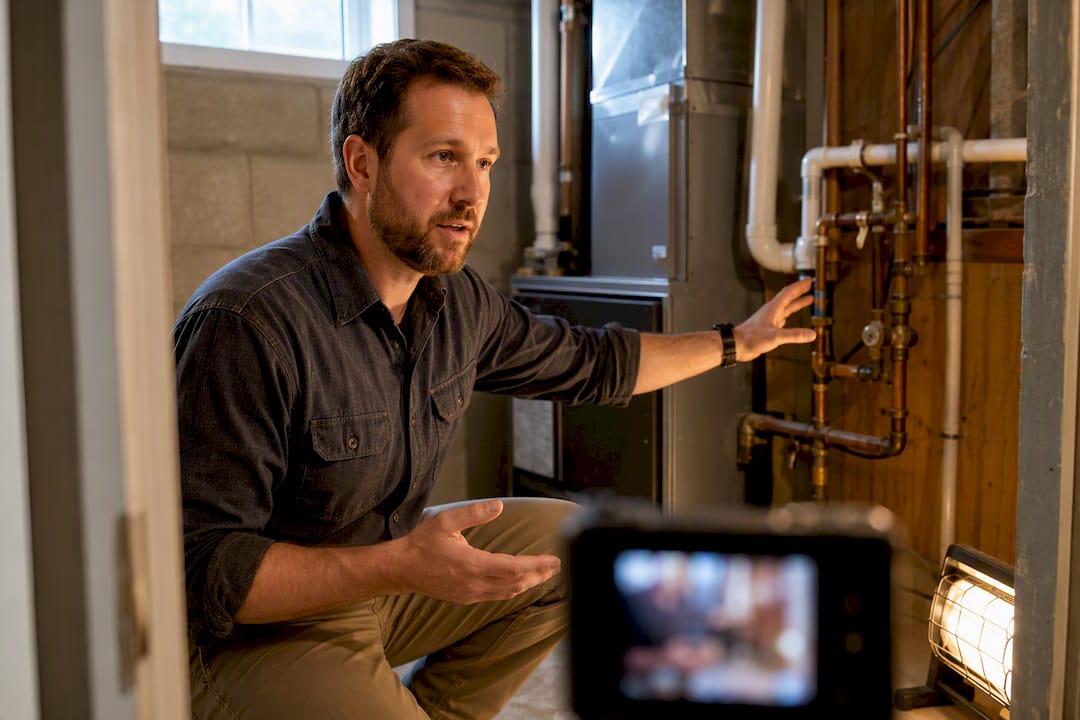
Pro Tip: Ask your inspector to narrate out loud while filming, room by room. A silent video tells you what a room looks like; a narrated one tells you what to worry about.
Closing Remotely: How Do You Prevent Wire Fraud?
Confirm early whether your title company and lender support RON, or whether they'll need you to sign in person or through a mobile notary. As of early 2025, 45 states and D.C. allow RON for real estate closings, but availability still varies by title company and lender, so don't assume it's automatic just because your state permits it.
Wire fraud is the single biggest financial risk in a remote closing, and it's entirely preventable with one habit.
- Call your escrow or title contact at a phone number you already had on file, not one from a new email, before wiring any funds.
- Never trust wiring instructions that arrive by email alone, even if the email looks legitimate.
- If you use a power of attorney for signing, put strict, documented limits on what it covers.
- Schedule an "alive and well" call with your attorney or title company on closing day itself, a standard requirement in many POA closings.
The FBI's guidance on real estate wire fraud is blunt about this: phone verification with a previously confirmed contact is the single most effective step against this kind of fraud. Once funds clear, your local coordinator handles keys, locksmith access, utility transfers, and a final walkthrough so nothing gets missed between signing and move-in. A buyer closing checklist keeps these steps in order instead of scattered across emails and texts.
How Do You Keep Your Remote Search Organized?
Spreadsheets fall apart fast when you're comparing fifteen houses across three states, especially once inspection notes, agent feedback, and offer status all live in different apps. A structured dashboard solves the actual problem: keeping every listing's synced link, your private rating, room-by-room notes, inspection flags, and offer status in one place you can actually search later.
A few templates make the difference between organized and chaotic:
- A live-walkthrough log for every video call, noting what your agent checked and what concerned you.
- An inspection summary that pairs the inspector's report with your own notes and photos.
- A visit-day script for the one trip you get, so you don't waste time deciding what to check on-site.
- An offer tracker that shows exactly where each property stands, from first look to signed contract.
Private, shared workspaces matter more than people expect. When your notes stay confidential by default, you and your agent can be honest about a home's flaws without worrying the seller's agent will see it. A house hunting spreadsheet guide walks through the fields worth tracking if you're building this from scratch, and a dedicated home search dashboard does the same work without the formula errors.
Pro Tip: Rate each home the same night you tour it, virtually or in person. Impressions blur fast once you've seen five houses in a week.
What Do Remote Buyers Get Wrong Most Often?
The biggest mistake I see isn't a bad inspection or a sloppy contract. It's letting emotion override process, falling for one video tour and skipping the boring verification steps because the house "felt right." Long distance house hunting punishes that instinct harder than a local search does, because you don't have the luxury of driving by twice before you decide.
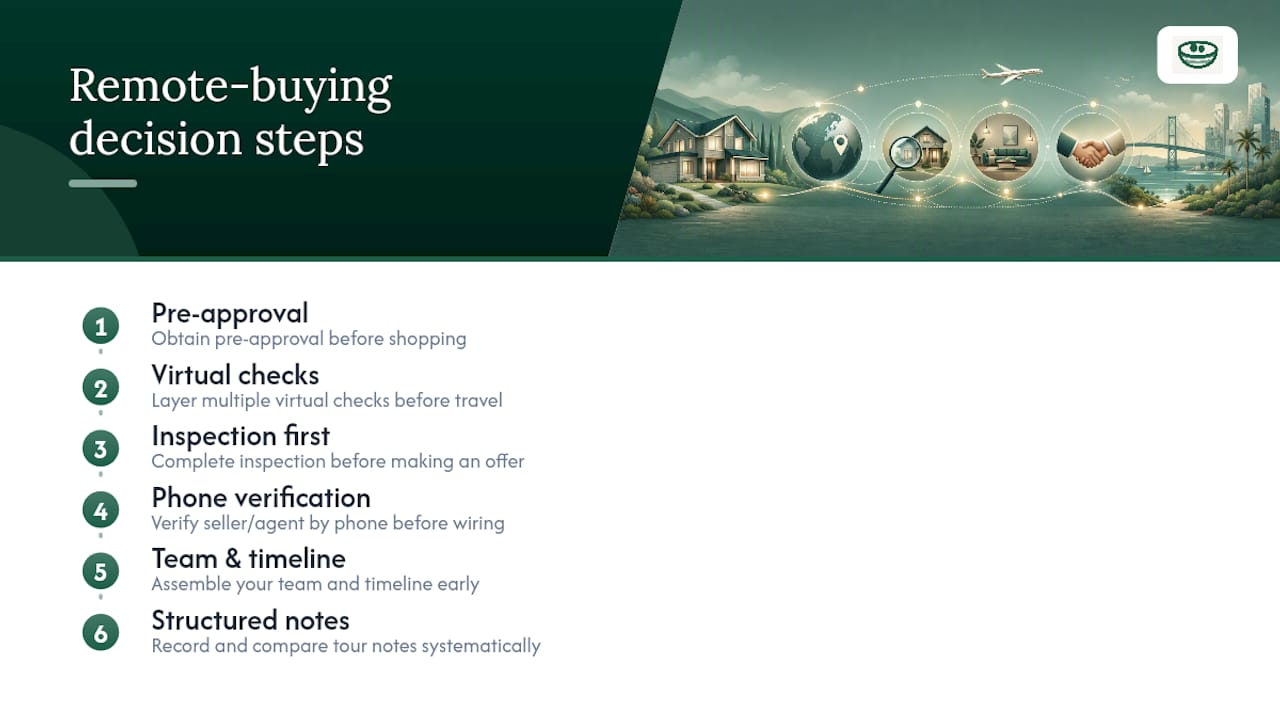
The buyers who do this well treat every step as a decision rule, not a feeling: pre-approval before shopping, layered virtual checks before travel, inspection before offer, phone verification before wiring a dollar. Structured notes matter more than people admit, since your impression of house number three fades fast by the time you've toured house number nine. Build your team and your timeline before you fall in love with a listing photo, not after.
— Antony
Try A Private Search Dashboard For Your Remote Search
A dedicated platform is the alternative to a chaotic pile of screenshots and half-remembered notes for long distance house hunting: it gives you one private place to track synced listings, log your own ratings and impressions, and follow every offer from first look to closing. It plugs directly into the checklist above, so when you finally get that one strategic trip, you're not scrambling to remember which house had the good light and which one had the freight line next door.

All notes can be kept private by default, allowing candid feedback about a home's flaws without concern about who else might see it. If you're juggling a dozen listings across two states and a spreadsheet that's already falling apart, start organizing your search on Nestnoted before your next round of virtual tours.
Where To Go For Official Guidance
- NMLS Consumer Access to verify a lender's licensing in your target state.
- Hud for federal housing programs and official buyer resources.
Sources
- Buying a Home in Phoenix From Out of State: How It Works in 2026 | CalzaCo Real Estate Team
- How to Buy a House in Another State: Save Time, Money, and Stress | EffectiveAgents®
- NMLS Consumer Access
- Hud