

Capture the key fields for every pocket listing: property ID, quick specs, one-line positive, one-line concern, disclosure status, private remarks, showing contact, and marketing preference. Keep them in one private, centralized record, and get the seller's written consent before restricting marketing. NAR's Clear Cooperation policy sets the compliance line, and a private tool like NestNoted gives you a place to hold it all.
TL;DR:
- Record every public marketing date and channel, including flyers, yard signs, website displays, and email blasts, then check the applicable MLS filing deadline.
- For office exclusive or delayed marketing listings, retain the signed seller certification, its date, local filing notes, and any applicable delay period.
- Restrict access to lockbox codes, alarm instructions, and caretaker contacts, while attaching consent records and timestamped edits to the same listing file.
- After each showing, capture attendance and buyer feedback promptly, update interest tags, and follow the prearranged escalation plan for strong leads.
Table of Contents
- What fields and documents belong in a pocket listing record?
- How do you set up templates, tags, and privacy controls?
- What should you do before, during, and after a showing?
- What must you document for office-exclusive and delayed marketing listings?
- Why does a privacy-first notes system produce better outcomes?
- How does NestNoted fit this workflow?
- FAQ
- Sources
What fields and documents belong in a pocket listing record?
Build your intake around a checklist you can copy into a CRM or a private note tool. Every item below should be filled in at intake or marked pending, so gaps are visible instead of forgotten.
- Property basics: address, MLS number if one has been filed, asking price or price guidance, beds and baths, square footage, and lot size.
- Two shorthand lines: one highlight and one concern, written the way you would say them to a buyer.
- Disclosure status: which forms are in the file, which are pending, and who is chasing them.
- Private operational notes: lockbox code, alarm instructions, and caretaker contact, all marked confidential.
- Showing logistics: best showing windows, preferred contact method, and whether a tenant or the seller will be home.
- Marketing instructions: whether the seller authorizes public marketing, which channels are allowed, and any photo or video restrictions.
- File inventory: photo sets, floor plans, the disclosure packet, and the signed seller certification if the listing is office-exclusive or on delayed marketing.
If you need a refresher on the basic concept before building the record, this pocket listing explainer covers what a pocket listing is and how it differs from a standard MLS listing. For intake questions that map to the fields above, our realtor briefing checklist is a good companion.
How do you set up templates, tags, and privacy controls?
A single source of truth beats spreadsheets and chat threads for one simple reason: details stop getting lost. When a teammate takes over a showing, they open one record instead of scrolling through multiple text conversations to find the alarm code or the seller's photo restrictions.
Set the system up in this order:
- Create a template. Use short text fields for highlights and concerns, long text fields for narrative notes, and checkboxes for each disclosure item.
- Add status tags. Mark every record as office-exclusive, delayed, or public, so marketing status is visible at a glance.
- Add interest tags. Use hot and cold labels for buyer interest, and update them after every showing.
- Lock down private remarks. Restrict who can view them, and store the signed seller consent with a timestamp and the agent's name.
- Attach assets to the same record. Keep photo sets and disclosure PDFs with the listing, and name files with the date and photographer.
Private remarks deserve extra care. Lockbox codes, alarm codes, and caretaker contacts are security-sensitive, so they should never be printed or shared with anyone who has not been cleared to see them.
Pro Tip: Record a brief voice note after each showing, or fill in a scorecard, so feedback gets captured while it is fresh.

Our voice notes system for buyer agents walks through the rapid-capture routine, and the privacy-first home search notes show how to separate private fields from shareable ones.
What should you do before, during, and after a showing?
A consistent routine keeps notes timely and traceable. Here is the rhythm we recommend.
- Before: confirm the seller's marketing preference, collect signed disclosures and certifications, and verify lockbox and safety details.
- During: work from the checklist template, record who attended, and note each buyer's interest level. Short voice notes beat trying to type while walking through a house.
- Immediately after: update the central record, flag high-interest leads, and send private feedback to the listing broker according to the seller's instructions.
- Follow-up cadence: decide in advance when strong interest gets escalated to the seller or broker, and track price-change alerts and show history in the same record.
- Version control: keep a timestamp and user name on every edit. If a question comes up about who knew what and when, the audit trail answers it.
The trickiest part is the handoff between showing and feedback. Buyers say candid things in the car, such as "the kitchen is a dealbreaker unless the price drops," and those comments are what shape a stronger offer later. Capturing them privately, within minutes, is what makes the record valuable. For sharing the right notes with a buying client, see these five buyer notes to share with your realtor.
What must you document for office-exclusive and delayed marketing listings?
Documentation is where privacy and compliance meet. The MLS Clear Cooperation policy sets requirements for submitting listings after public marketing. Check the applicable MLS rules for the filing deadline. Public marketing includes flyers, yard signs, brokerage website displays, and digital communications such as email blasts.
Log the date of any public marketing activity as soon as it happens, and check the applicable MLS rules for the filing deadline.
Options let sellers limit exposure. With an office-exclusive listing, the listing is filed with the MLS but not disseminated to other participants, and NAR's pre-marketing guidance says the broker must obtain a signed seller authorization acknowledging the MLS benefits being waived or delayed. NAR's Multiple Listing Options for Sellers adds a delayed marketing option and leaves delay periods to local MLS discretion. NAR's consumer guide frames seller privacy as a strategic choice that needs clear documentation.
Save these items in every record:
- The signed seller certification and the date it was signed
- Any local MLS filing notes, including the delay period if one applies
- The date and channel of any public marketing activity
- A note separating one-to-one broker communication from broadly available marketing
Why does a privacy-first notes system produce better outcomes?
My view is simple: confidential notes make for honest notes. When agents and buyers know that impressions stay private, they write down the real objections, such as a noisy street or a dated roof, instead of polite summaries. Those candid details are exactly what a strong offer is built from. Structure matters just as much. A record with timestamps, tags, and a clear marketing status prevents the small negotiation errors that happen when a team is working from memory. Privacy and structure are not trade-offs. They reinforce each other, and a tool built around private-by-default notes, like NestNoted, shows the approach in practice.
— Antony
How does NestNoted fit this workflow?
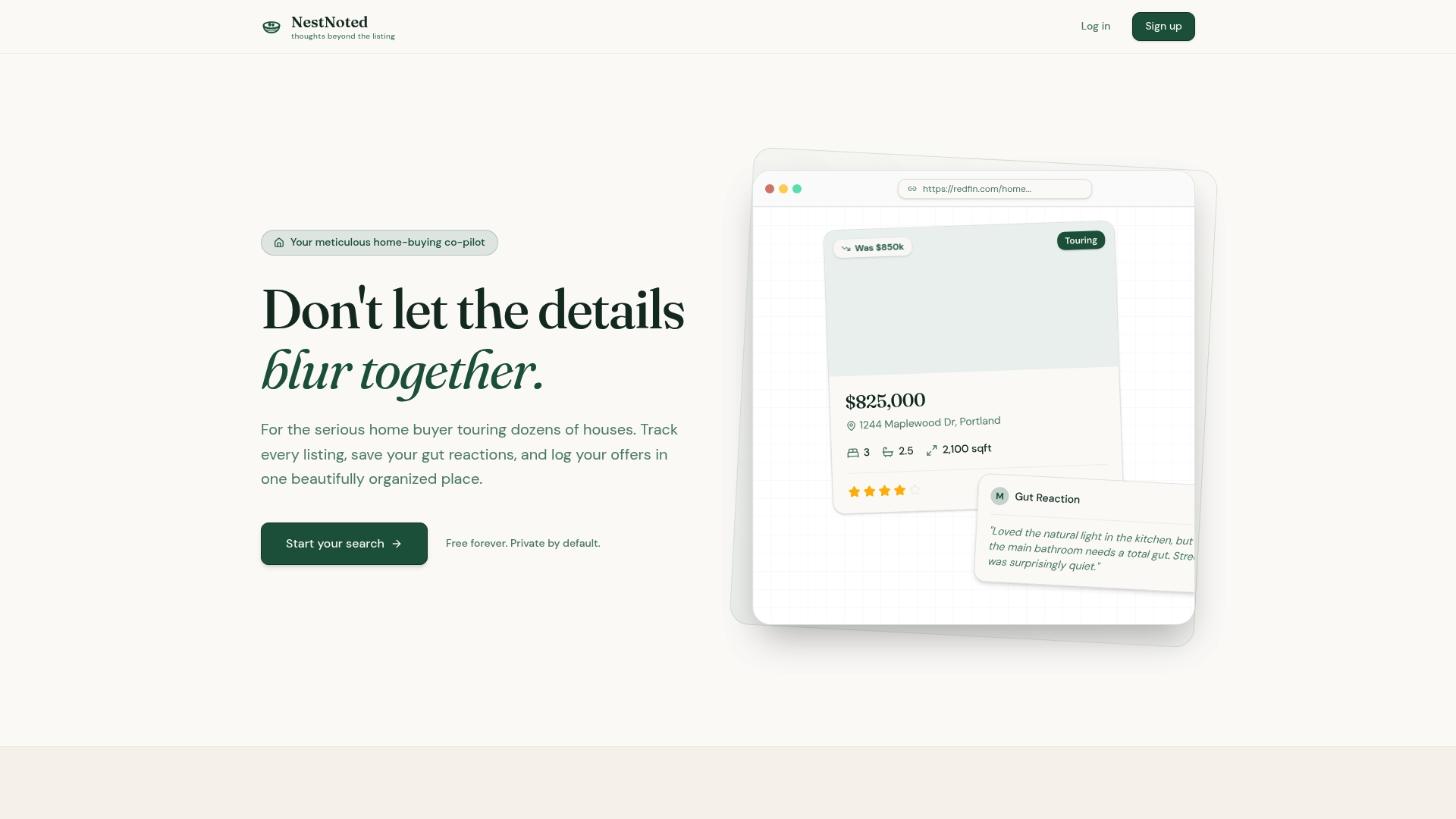
If you would rather not stitch this system together yourself, we built NestNoted to hold it in one private place. Here is how our features map to the checklist and routine above:
-
Private-by-default notes: private remarks stay confidential unless you choose to share them.
-
Collaboration workspaces: share what a teammate or client needs, and nothing more.
-
Side-by-side comparison: weigh listings against each other after a day of showings.
Use the comparison view afterward. Ready to try it? Sign up for NestNoted and start your first pocket listing record today.
FAQ
In real estate, what is a pocket listing?
A pocket listing is a property for sale that is not publicly marketed or broadly shared through the MLS. Agents may share it privately with select buyers or brokers. Under NAR's options, this is often handled as an office-exclusive or delayed marketing listing with signed seller consent.
What are the 5 steps of organizing pocket listing notes?
Capture the key fields, store them in one central record, tag the marketing status, restrict private remarks, and update after every showing. This sequence keeps notes searchable and private. Adding timestamps to each edit keeps the history traceable.
What does sold before processing mean?
It generally describes a property that sells before it ever goes through the standard MLS submission and marketing process. Pocket and office-exclusive listings can end this way. Definitions can vary by local MLS, so check your MLS rules for the exact term.
How do you keep seller consent documentation safe?
Store the signed certification on the listing record itself, with the date signed and the agent's name. Restrict access to people who need it. Keeping consent next to your marketing notes makes compliance checks fast.