

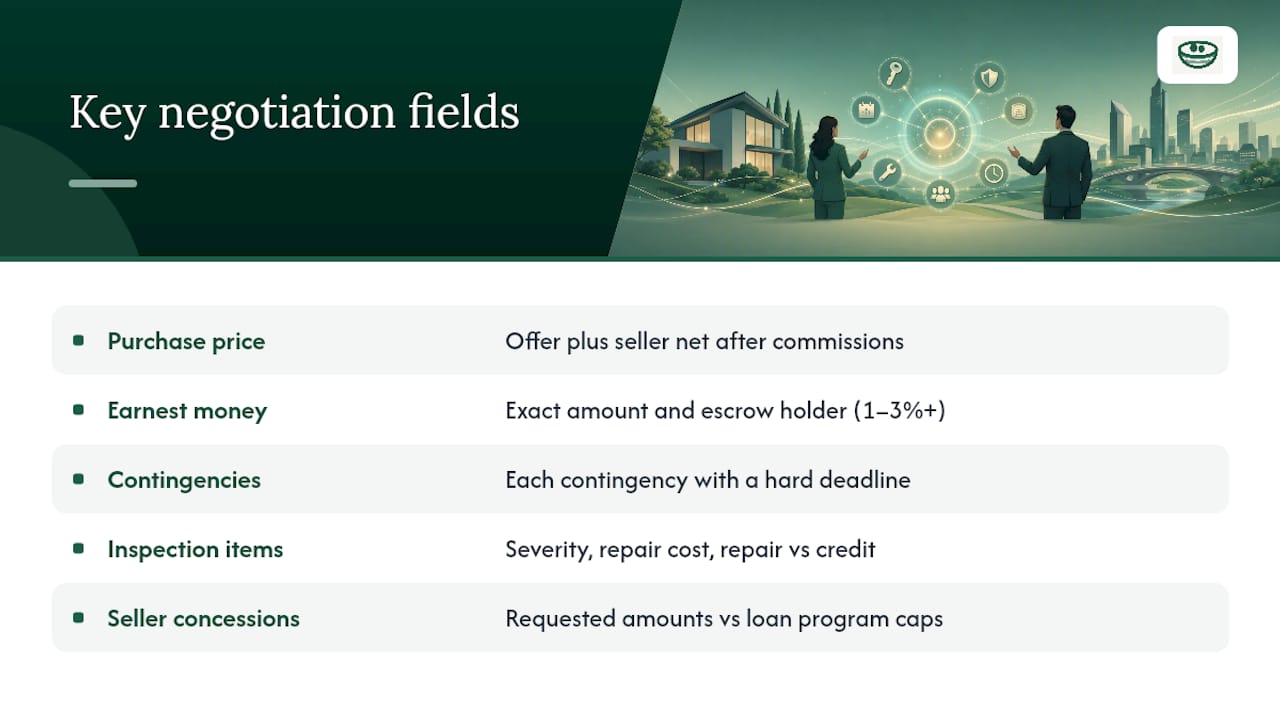
Track eight core items for every property you're negotiating: price against seller net, earnest money, contingency deadlines, inspection findings, appraisal gap coverage, seller concessions, closing terms, and offer status. Attach documents, set deadlines for each contingency, and keep the whole record in one private place instead of scattered texts and email threads. That's the difference between reacting to a seller's counter and already knowing your next move.
TL;DR:
- Tracking seller net proceeds and deposit details helps you evaluate offers beyond just the purchase price, especially when requesting credits.
- Setting clear contingency deadlines and recording inspection findings with attached images or quotes prevents missed deadlines and supports your negotiations effectively.
- Prioritizing and scoring multiple properties based on your key factors and documenting their provenance improves decision-making and negotiation strength.
- Building a private, structured negotiation record with consistent fields and attaching relevant documents keeps all details organized for better leverage.
- Using a dedicated property negotiation workspace reduces miscommunications, enhances transparency, and ensures deadlines and offers are managed proactively.
Table of Contents
- What Negotiation Points Should You Track for Every Property?
- How Do You Prioritize Negotiation Points Across Multiple Properties?
- What Fields Belong in Every Negotiation Record?
- How Do You Schedule and Automate Negotiation Deadlines?
- Why Private, Structured Negotiation Notes Change Outcomes
- How NestNoted Helps You Track Negotiation Points
- Sources
What Negotiation Points Should You Track for Every Property?
A negotiation log that actually helps you needs specific fields, not a vague notes app. Here's what belongs in it and why each one earns its place.
Purchase price and seller net. Don't just track your offer number. Track what the seller actually walks away with after commissions and any concessions you're requesting. Framing an offer around the seller's net proceeds often lands better than a flat price cut, especially when you're asking for credits elsewhere.
Earnest money. Deposits typically run 1% to 3% of the purchase price, though competitive markets can push that past 5%. Note the escrow holder and the exact amount, since this money is at risk if you back out outside your contingencies.
Contingencies with deadlines. Inspection, financing, appraisal, and title contingencies each need a hard date. Vague or missing deadlines can make a contingency unenforceable, which defeats the point of having one.
Inspection items. Log severity, estimated repair cost, and whether you're asking for a repair or a credit.
Appraisal gap coverage. Record the cap you're willing to cover if the appraisal comes in low.
Seller concessions. Track requested amounts against what your loan program actually allows, since conventional, FHA, and VA loans cap seller contributions differently.
Closing date and terms. Possession date, rent-back arrangements, inclusions, exclusions, and any special provisions.
Status field. A timestamped history of offer, counter, and acceptance keeps everyone looking at the same version of the truth.
How Do You Prioritize Negotiation Points Across Multiple Properties?
Once you're tracking three or four properties at once, gut instinct stops working. You need a way to compare them side by side without re-reading every email thread.
- Set your priorities first. Decide what matters most: price, repair costs, closing timeline, or inclusions like appliances. Write these down before you start scoring anything, or you'll unconsciously favor whichever house you saw last.
- Score each dimension 1 to 5. Rate every property on price competitiveness, repair burden, timeline fit, and concession terms. Add them up for a rough total competitiveness score you can compare across listings.
- Record provenance for every score. Note the specific comps you used, the exact disclosure line that flagged an issue, or the inspection date behind a repair estimate. Pointing to a document beats relying on memory when a seller pushes back.
- Match your posture to market signals. A property that's been sitting for 40 days with two price drops calls for a firmer ask than one that hit the market three days ago with five showings booked.
- Tag and filter as your pipeline grows. Use color codes or tags for urgent deadlines and high-dollar concession requests so they surface automatically instead of getting buried under older properties.
Pro Tip: Keep your scoring rubric to four or five weighted categories, max. A 12-factor spreadsheet feels thorough but usually just slows down decisions when a counteroffer is sitting in your inbox with a 24-hour clock on it.
Tools built for side-by-side house comparison make this scoring step far less painful than a shared spreadsheet everyone edits differently.
What Fields Belong in Every Negotiation Record?
Consistency is what makes a negotiation log useful three properties in. Build every entry around the same fields: field name, short description, owner, deadline, dollar impact, source document link, attachments, status, and freeform notes.
Three templates cover most of what you'll need:
- Pre-offer template: comps summary, target seller net, preferred closing timeline, and must-have contingencies.
- Post-inspection addendum template: line-item repair issue, estimated cost, recommended ask (repair versus credit), and the contractor quote attached.
- Counter-offer tracker: date and time, exactly which fields changed, who signed, and when the counter expires.
Photos and voice notes matter more than people expect. A cracked tile photo linked directly to its inspection line item is worth more in a negotiation than a paragraph describing it. When you're deciding whether to track repair estimates as a credit request or a direct repair ask, having the contractor quote attached to that specific line item makes the conversation with the seller's agent much shorter. Once repairs and credits are agreed, they become a binding addendum, and that document needs to reach your lender and title company, since it changes figures both parties are relying on for closing.
How Do You Schedule and Automate Negotiation Deadlines?
Contingency clocks don't pause for a busy week. Miss an inspection deadline by a day and you can lose your right to renegotiate or walk away with your earnest money intact.
- Before you offer: Pull comps from the last six months, confirm your lender's actual turnaround time, and set target dates for inspection and financing before you submit anything.
- At submission: Set a reminder for your offer's expiration, book the inspection appointment, and note when the appraisal needs to be requested.
- After inspection: Give yourself 48 to 72 hours to review findings internally, draft the addendum, and submit it before your inspection contingency deadline closes, typically 7 to 15 days out.
- Before closing: Run a final walk-through checklist, verify repair receipts match what was promised, and set a reminder for any escrow holdback tied to unfinished work.
- Throughout: Use calendar reminders your agent can also see, and keep escrow-holder contact details in the same record as everything else. Financing contingencies commonly run 14 to 21 days, and that clock depends entirely on your lender staying on schedule, which is worth tracking against your mortgage document checklist rather than trusting memory.
Why Private, Structured Negotiation Notes Change Outcomes
I've watched enough buyers lose leverage simply because their notes lived in three different places. A repair estimate sat in a text thread, the comps were in an email attachment, and the actual counteroffer terms existed only in someone's memory. By the time they needed to make a case for a credit, they'd lost the specifics that would have won the argument.
Privacy changes how honestly people write things down. When a buyer knows their notes on a property's flaws or a seller's desperation signals won't become public, they write the unfiltered version, and that unfiltered version is what actually helps in a negotiation. Agents benefit too: a shared private workspace where everyone sees the same status history, the same attachments, and the same deadlines removes the "wait, did we agree to that?" moment that costs deals. Some tools are built around exactly this problem: side-by-side comparisons, deadline fields, attachments tied to specific line items, and private notes that don't require trusting a group text to hold the truth.
— Antony
How NestNoted Helps You Track Negotiation Points
This tool gives you the private workspace this whole process assumes exists: one place per property for price, contingencies, inspection findings, and status history, instead of five apps and a notebook. Every field in the templates above (deadlines, dollar impact, attachments, owner, status) maps directly to what such a tool lets you build for each listing.
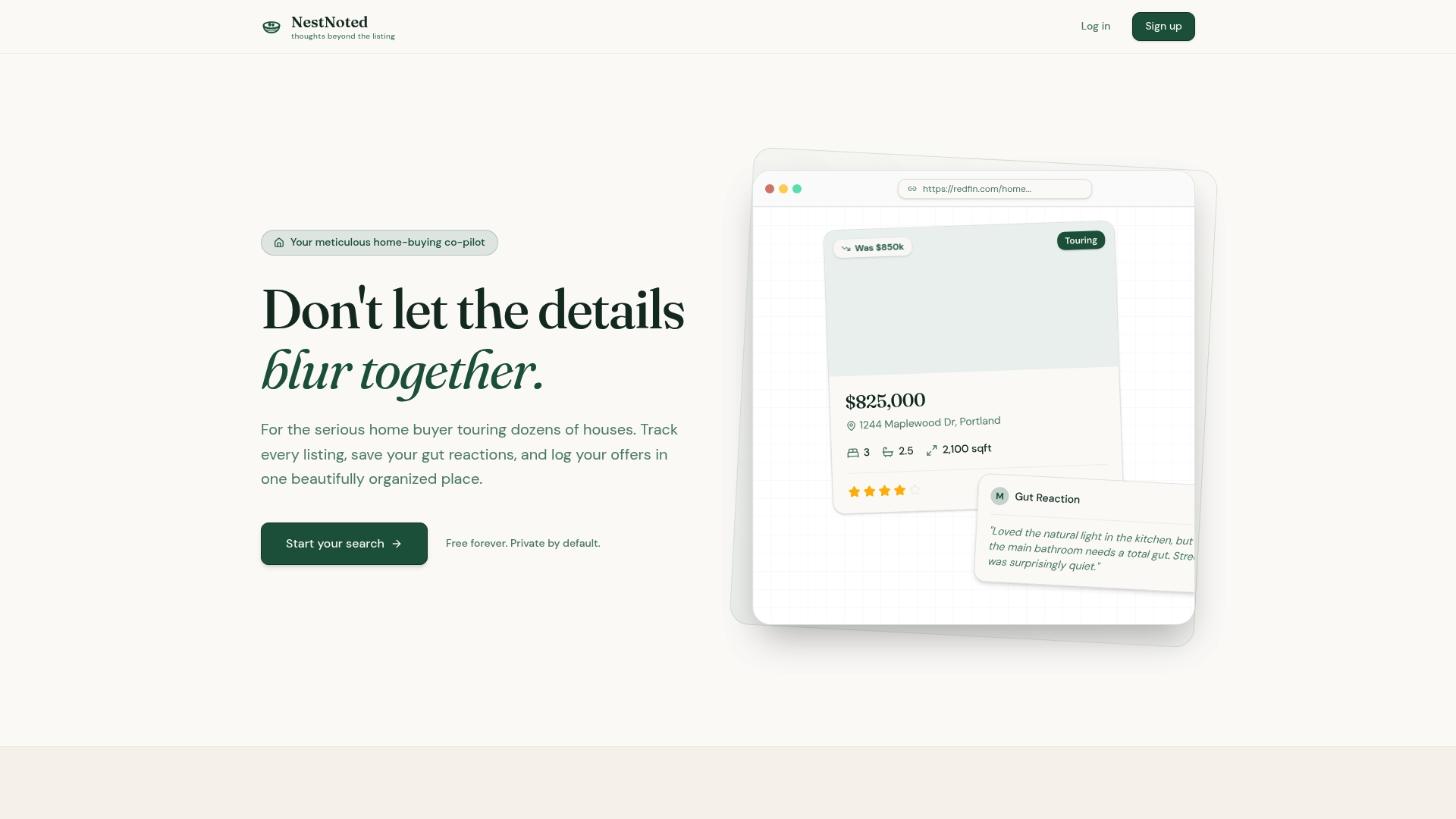
Getting started takes a few steps. Create a property entry for each home you're seriously considering, attach the disclosure and inspection reports, set deadlines for inspection, financing, and appraisal, then invite your agent into that specific workspace. From there, configure alerts so a counteroffer or an approaching deadline doesn't sit unread for two days. Every note stays private by default, so you and your agent can be candid about a home's flaws without worrying who else might see it, and many core features may be available for free. If you're juggling more than one active offer right now, set up your NestNoted account and get your first property logged before your next showing.
Sources
For deeper context on the negotiation mechanics covered here, Redfin's guide to negotiating house price breaks down how comps set a realistic baseline before you write an offer. LegalClarity's overview of real estate negotiation explains contract mechanics from offer to closing, including why deadlines need to be explicit. For post-inspection strategy specifically, Ficustree's guide on securing the right seller credit walks through converting inspection findings into a documented, defensible ask.
- How to Negotiate the Price of a House in 2026 | Redfin
- How to Negotiate Real Estate From Offer to Closing - LegalClarity
- How to Negotiate When Buying a House: A Complete Guide | Home Stimulus
- How to Write a Winning Offer on a House: Price, Earnest Money, Contingencies, and More | EffectiveAgents®