
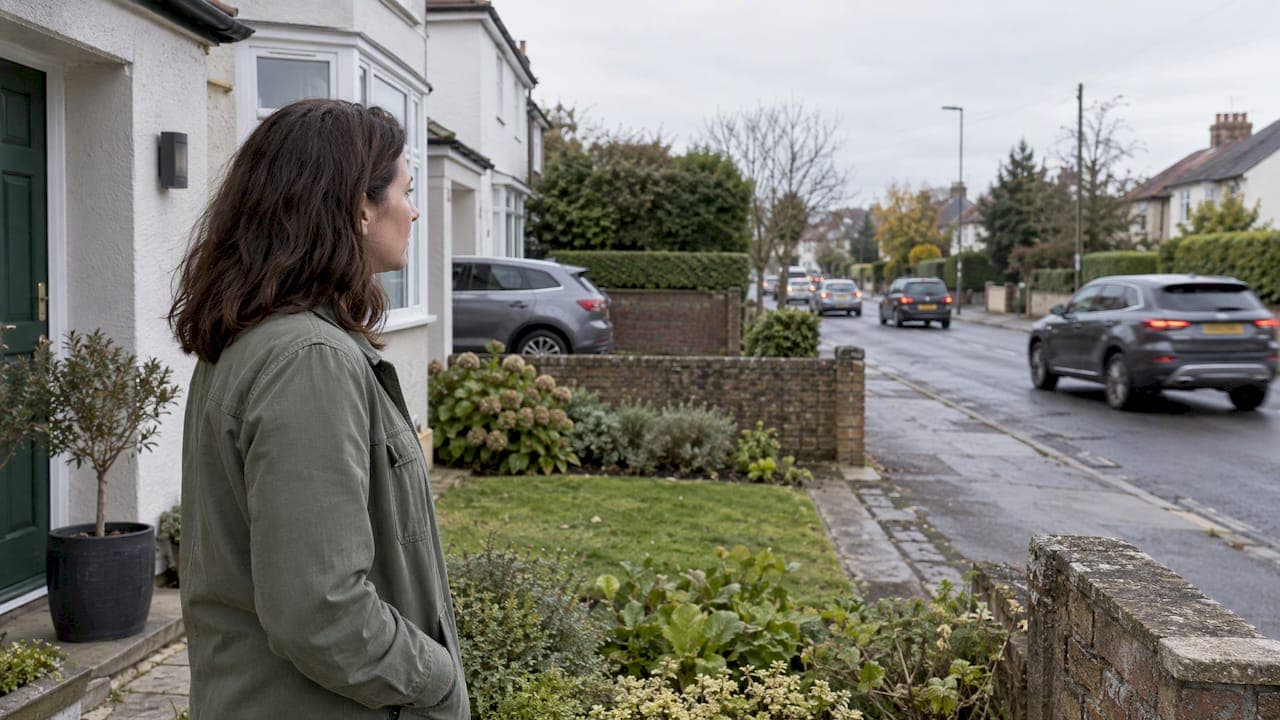
A home on a busy street can be a smart buy if you value lower prices, transit access, and walkability more than quiet evenings, but it's a poor fit if you're noise-sensitive, raising small children, or planning to resell within a few years. The right call depends on your noise tolerance, household makeup, commute needs, and how long you plan to stay. The sections below walk through what to check before you decide.
TL;DR:
- Homes on busy streets often cost up to 20% less and offer better access to transit, shops, and municipal maintenance compared to quieter neighborhoods.
- Traffic noise remains persistent over time, with noise barriers providing only marginal price increases, while safety and air quality risks frequently outweigh benefits.
- Residents should conduct multiple site visits at different times of day, testing with windows open and closed, and request professional noise studies if serious concerns exist.
- Noise mitigation measures like windows and landscaping can help but have limited effectiveness due to sightline or elevation issues, and costs should be factored into negotiations.
- Transit-focused buyers and investors typically accept street noise trade-offs, while noise-sensitive households or those planning resale should avoid homes with unmitigated street exposure.
Table of Contents
- Pros: practical advantages of homes on busy streets
- Cons: noise, safety, health, and resale risks explained
- How to evaluate a busy-street property on-site and by request
- Mitigation and negotiation: realistic fixes and how to use them
- How NestNoted and Antony's checklists help buyers compare busy-street homes
- Which buyers actually fit a busy-street home
- Try NestNoted while you compare busy-street homes
- FAQ
- Sources
Pros: practical advantages of homes on busy streets
Busy-street homes often sell below comparable properties on quieter blocks, which means more square footage or a better neighborhood for the same budget. That price gap reflects real trade-offs, but for the right buyer it translates into genuine value.
Access is the biggest draw. Homes along major corridors tend to sit closer to bus lines, grocery stores, and other daily services, which can shave real time off errands and commutes. You can verify this yourself rather than relying on a listing's walk score claim; our walkability verification guide walks through how to check it in minutes, and our commute comparison tool helps you test actual drive and transit times against quieter alternatives.
Busier roads are also more likely to get consistent municipal attention: plowing, repaving, and streetlight maintenance tend to happen faster on arterial roads than on side streets.
- Lower price per square foot compared to similar homes on quiet streets
- Better transit and walkability to shops, schools, and services
- More consistent road maintenance and often easier street parking for guests
These advantages matter most to a specific type of buyer: investors looking for value and rental demand, commuters who want to cut travel time, and anyone who weighs convenience over silence. If none of that describes you, the discount may not be worth what comes with it.
Cons: noise, safety, health, and resale risks explained
The downsides of a busy-street home are concrete and measurable, not just a matter of personal taste. Noise is the most obvious one. Traffic engineers measure road noise using the Day-Night Average Sound Level, or L_DN, which adds a 10-decibel penalty to nighttime noise to account for how much more disruptive it is to sleep. FHWA guidance treats an L_DN at or below 65 decibels as the common benchmark for residential areas, and getting an accurate reading requires a full 24-hour sample, not a five-minute walk-through.
One study found that noise barrier construction produced a 6.8% jump in nearby home prices, and that increase held steady over time, according to an NBER working paper on noise and property values. The same research estimates that more than 42 million Americans live with medium or high traffic noise exposure, a scale that helps explain why noise shows up so consistently in resale discounts.
Safety is a separate concern. Wider, busier roads are associated with harder and less frequent street crossings, which tends to suppress walking trips, particularly for children and older adults. If your household includes young kids who'll be biking or walking to a bus stop, this is worth watching during an actual site visit, not just assuming it from the listing photos.

Air quality adds another layer. EPA's near-roadway research shows that pollutant concentrations near busy roads are typically elevated and tend to fall toward background levels within roughly 500 to 600 feet, though the exact distance depends on traffic volume, wind patterns, and local terrain. Homes closer than that, especially near truck routes, carry higher exposure for pollutants linked to respiratory issues.
On resale, Realtor.com has cited expert estimates of discounts as steep as 20% in some markets, though the real number depends heavily on traffic volume, distance from the road, and what comparable sales in the area actually show.
- Noise rarely fades with time; if it bothers you on the first visit, it likely will later too
- Pedestrian and cyclist risk rises with traffic speed and crossing difficulty
- Everyday nuisances add up: vibration from heavy trucks, reduced privacy, harder deliveries, and street parking competition
How to evaluate a busy-street property on-site and by request
A single daytime showing tells you almost nothing about what living there is actually like. The fix is a short, repeatable visit plan.
- Visit at four distinct times: weekday morning rush, weekday evening rush, a weeknight after 10 PM, and a weekend afternoon.
- Test with windows open and closed in every room that faces the road, including bedrooms, to gauge how much insulation the house already provides.
- Count heavy vehicles during a 15-minute window at each visit; truck and bus frequency matters more than raw traffic volume for both noise and air quality.
- Note which rooms and outdoor spaces face the street versus the back of the lot, since exposure can differ sharply between the two.
- Ask the seller or agent about recent comparable sales on quieter streets nearby, any planned road widening or transit changes, and whether anyone has commissioned a noise or air-quality study.
- Request a professional noise study if the home is a serious contender and the first impressions are mixed. FHWA's measurement field guide outlines how a proper study selects sampling sites and avoids one-off disturbances that could skew results.
Pro Tip: Bring a basic decibel meter app on your phone for a rough read, but treat it as a sanity check, not a substitute for a real study; phone microphones are not calibrated instruments.
Our home tour checklist covers the broader set of items worth checking on any visit, and pairs well with the traffic-specific steps above.
Mitigation and negotiation: realistic fixes and how to use them
Mitigation can soften a busy-street home's downsides, but it has real limits worth understanding before you count on it.
At the home level, acoustic windows, added wall insulation, and HVAC filtration can meaningfully cut indoor noise and particulate exposure. A guide to indoor air quality and filtration options covers what filtration upgrades can realistically achieve for a household near a busy corridor. At the site level, noise walls and landscaping help, but their effectiveness depends on line-of-sight: gaps, driveways, and elevation changes can let sound through even with a wall in place, as EPA's near-road research notes.
- Request seller credits sized to estimated remediation costs rather than a vague discount ask
- Build inspection contingencies around noise or air findings if you have real concerns
- Pull comparable sales on quieter streets nearby to test whether the asking price already reflects a fair discount
Pro Tip: Price out window upgrades or filtration before you negotiate; a $3,000 to $5,000 fix is a concrete number to anchor a credit request, far stronger than "it's loud."
How NestNoted and Antony's checklists help buyers compare busy-street homes
Touring five busy-street homes in a week makes the details blur fast: which bedroom faced the road, how many trucks passed, whether the yard felt exposed. Logging separate, time-stamped notes for each room and visit keeps those details straight and keeps your comparisons honest rather than colored by whichever house you saw last.
NestNoted gives you a private space to record exactly that kind of granular detail, then compare properties side by side when it's time to decide. The checklist fields above map directly onto what you'd track there: truck counts, which rooms face the street, noise observations by time of day.

Which buyers actually fit a busy-street home
Transit-first buyers and investors comfortable with a smaller resale pool tend to do well here; the trade-offs work in their favor. Noise-sensitive people, households with young kids, and anyone planning to sell within a few years usually regret it. Trust what you measure on-site, not what you hope you'll get used to.
— Antony
Try NestNoted while you compare busy-street homes

Keeping separate, private notes on every property you tour, including truck counts and noise impressions by room, makes comparing busy-street homes far less guesswork and more evidence. NestNoted gives you that space for free, with side-by-side comparisons built in in minutes.
| What you track | Where it helps |
|---|---|
| Time-stamped visit notes | Comparing noise across multiple showings |
| Room-by-room observations | Spotting which homes have street-facing bedrooms |
| Side-by-side comparisons | Deciding between several busy-street contenders |
FAQ
What are the downsides of living on a busy road?
The main downsides are persistent noise, higher pedestrian and cyclist risk at crossings, elevated near-road air pollutant exposure, and a smaller resale buyer pool. Everyday nuisances like vibration, reduced privacy, and parking competition also add up over time.
How much does a busy street affect resale value?
The discount varies widely by traffic volume, distance from the road, and local comparable sales, but Realtor.com has cited expert estimates as high as 20% in some markets. A study on noise barriers found a 6.8% price increase once noise mitigation was added nearby, which suggests noise itself carries real market weight.
What devalues a house the most?
Location-based factors like heavy traffic noise, proximity to major roads, and limited privacy are consistently cited as value detractors, alongside deferred maintenance and poor condition. For busy-street homes specifically, unmitigated noise and visible safety concerns tend to weigh most heavily on buyer interest.
What is the 3-3-3 rule for buying a house?
This is a budgeting guideline, not a location rule, and it generally suggests spending no more than three times your annual income on a home, keeping your down payment and move-in costs within a manageable range, and limiting your mortgage payment to a set share of monthly income. It doesn't address street noise or location trade-offs directly, so it's worth pairing with the site-specific checks covered above.
Should I get a professional noise study before buying?
It's worth it for a serious contender where your own visits leave you unsure, since a professional study follows a consistent measurement protocol rather than a single impression. FHWA's measurement field guide outlines how sites are selected and sampled to get a representative reading.
Sources
- FHWA - Sound descriptors and noise basics
- Moretti & Wheeler — Noise barriers and property prices (NBER/working paper)
- EPA — Near roadway air pollution and health: FAQ (EPA-420-F-14-014)