

To track home offers reliably, use one private tracker that records every listing, timestamps your impressions, and manages offer terms with built-in deadline alerts. This turns dozens of scattered showings and negotiations into one organized system instead of a pile of texts and half-remembered walkthroughs. NestNoted is built for exactly this, and it pairs naturally with the standardized paperwork lenders issue for every offer, the Loan Estimate and Closing Disclosure, which give you a fixed format for comparing lender costs side by side.
TL;DR:
- Most buyers should adopt a private tracking system to organize listings, offers, and deadlines, preventing memory lapses and missed opportunities.
- Recording objective details like address, listing ID, and tour date, along with subjective impressions, helps clarify preferences and avoid confusion during negotiations.
- Using a weighted scorecard with a clear walk-away threshold ensures consistent decision-making and prevents emotional overpays.
- Tracking offer components such as price, contingencies, deadlines, and response status keeps submissions timely and minimizes overlooked details.
- A dedicated offer management tool that auto-imports listings, stores documents, and sends deadline alerts is essential once multiple properties and offers are involved.
Table of Contents
- What to Record for Each Listing and Offer
- Build a Scorecard With a Real Walk-Away Rule
- From Ready to Submitted: Tracking the Offer Itself
- Where the Right Tools and a Little Automation Fit In
- What to Share With Your Agent, and What Stays Private
- Why a Private Tracker Changes How Serious Buyers Negotiate
- Try NestNoted: Map the Workflow to the Product
- Sources
- FAQ
What to Record for Each Listing and Offer
Every property you tour deserves a record that outlives your memory of it. At minimum, log the address, MLS number or listing ID, list price, and the date you toured it. Those four fields alone let you reconstruct a timeline months later when you're trying to figure out why one house felt better than another.
Separate what you observed from what you felt. "Kitchen has original 1987 laminate counters" is a fact. "Kitchen felt small and dated" is an impression, and both matter, but conflating them makes your notes unreliable when you revisit a listing weeks later.
For any home you actually make an offer on, attach a document checklist to that record:
- Offer price and key terms (contingencies, closing date, seller concessions)
- Earnest money amount and the date it was submitted
- Pre-approval letter or proof of funds used for that specific offer
- Seller's counteroffer notes, if any
- Repair estimates tied to inspection findings
Timestamp everything, including who wrote it. If you're touring with an agent or a partner, note whose impression is whose. Buyers who finalize notes within an hour of a tour using a consistent photo order and short rating fields avoid the memory drift that sets in after the sixth open house of a Saturday.
Pro Tip: Photograph rooms in the same order every time, kitchen, primary bedroom, then the yard, so side-by-side comparisons later take seconds instead of minutes of scrolling to find the shot you need.
Build a Scorecard With a Real Walk-Away Rule
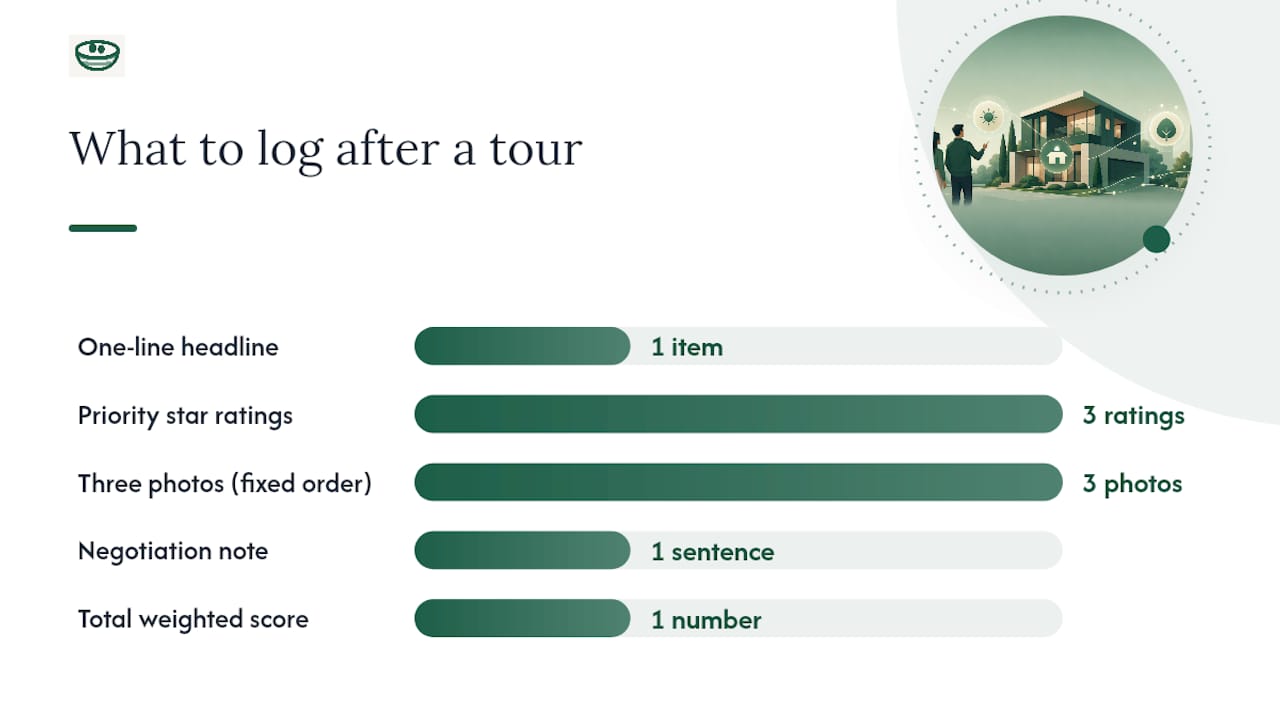
A template only works if you fill it out the same way every time. Right after a tour, before you drive to the next showing, log five things in under two minutes:
- A one-line headline impression ("bright, but backs to a busy road")
- Star ratings (1 to 3) on your top three non-negotiable priorities
- Three photos in fixed order
- One sentence on negotiation leverage (repairs needed, overpriced for the block, motivated seller)
- A total score against your weighted criteria
Weight the criteria that actually matter to you, commute time, school district, structural condition, and give each a score of 1 to 5. Multiply by importance, sum it up, and you have a number you can compare across 20 properties without relying on which one you happen to remember most vividly.
The critical piece most buyers skip is a walk-away threshold. Set a hard floor on non-negotiables, like commute or school zone, and if a property fails that single criterion, it gets removed from your pipeline automatically, regardless of how good everything else scores. Experienced buyers who set these thresholds in advance avoid the emotional override that leads to overpaying for a house with a great kitchen and a 90 minute commute.
If you're buying with a partner or working with an agent, compare scores before comparing opinions. Disagreements usually trace back to different weights, not different houses. A home comparison chart that shows both sets of numbers side by side settles most of those disputes in minutes. Once a property clears your walk-away threshold and lands in your top tier, that's your signal to start assembling an offer.
From Ready to Submitted: Tracking the Offer Itself
Before you write an offer, confirm three things: your pre-approval is current, you've run the numbers on what this specific price actually does to your monthly payment, and you have a rough repair estimate if the inspection flagged anything. Skipping that last step is how buyers end up asking for concessions they should have built into the offer price from the start.
Assembling the packet matters as much as the number you offer. A competitive submission usually includes:
- Preapproval or verified approval letter
- Proof of funds for earnest money and down payment
- A signed offer contract with contingencies clearly marked
- A short cover letter, if the market rewards a personal touch
- Repair estimate notes if you're requesting credits
Buyers competing in tight markets often add earnest money of 2 to 3% of the purchase price, pre-inspections, escalation clauses, or appraisal-gap coverage to strengthen an offer, and each of those needs its own line in your tracker so you remember exactly what you promised.
Give every offer a status label, submitted, countered, accepted, under contract, and timestamp each change. Track the response deadline, the inspection window, and the closing date as three separate alerts, not one vague "follow up" reminder.
Pro Tip: When multiple lenders are in play, compare the Loan Estimate against the eventual Closing Disclosure line by line. Flag anything where the APR, origination charges, or cash to close shifted by more than a small margin between the two documents; that's your cue to ask the lender for an explanation before you sign.
Where the Right Tools and a Little Automation Fit In
A spreadsheet works until you're tracking eight offers at once. At that point, manual tracking tends to break down, and the buyers who avoid missed deadlines are the ones using tools built for the job.
Look for three things in any tool you adopt:
- Auto-import from major listing sites so you're not retyping addresses and prices
- Document storage that keeps preapproval letters and disclosures attached to the right property
- Calendar sync and deadline alerts tied to each offer's specific timeline
For agents juggling many clients and listings, a dedicated offer-management platform with real-time status tracking may still be the better fit for the transaction side. A buyer-focused tracker and an agent's transaction software aren't competing tools. They serve different jobs and work best used together.
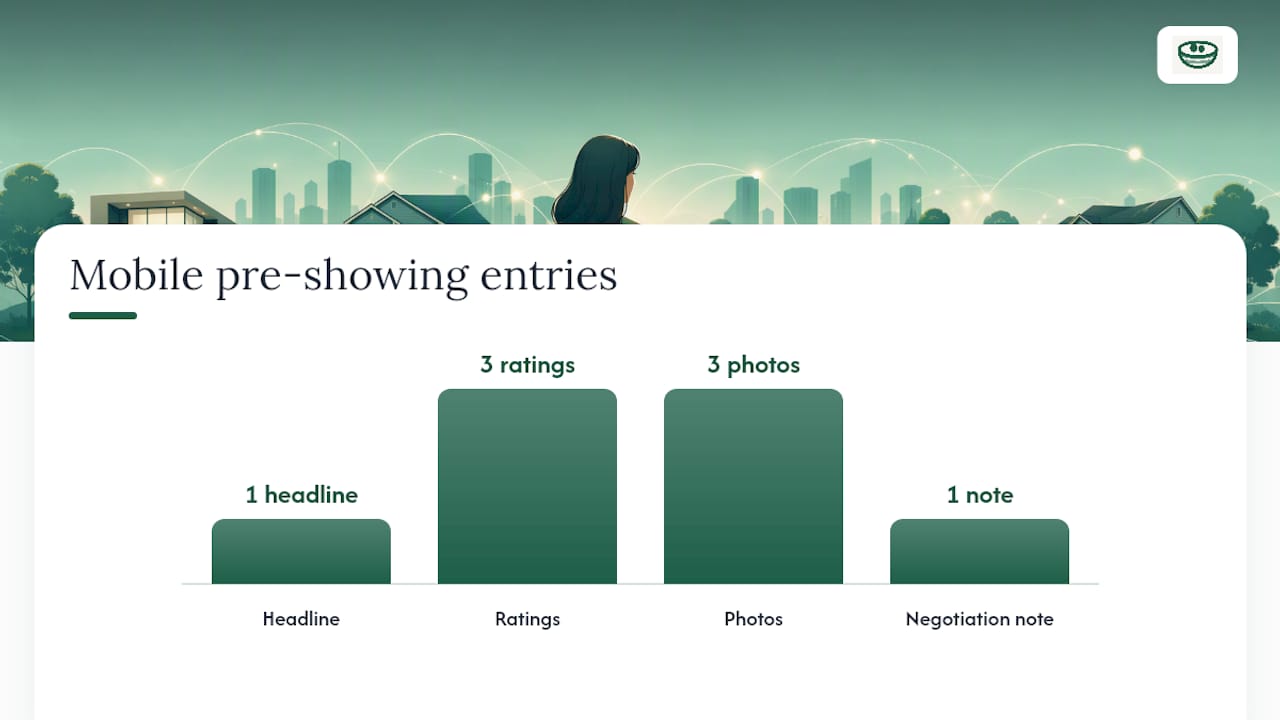
On mobile, the workflow that holds up under repeated showings is short: headline, three ratings, three photos, one negotiation note, entered before you leave the driveway. Some tools are built around that exact loop, with private notes by default, side-by-side comparisons, and an offer pipeline that keeps every listing, impression, and offer term in one place.
What to Share With Your Agent, and What Stays Private
Your raw impressions and internal scores don't need to leave your workspace. Share the facts that move a negotiation forward, offer price, contingencies, timeline, and keep the "this kitchen felt cramped" notes to yourself unless they're directly relevant to a counteroffer.
A shared workspace works best when it separates two layers: a collaborative view for offer terms and deadlines, and a private layer for scoring and candid notes. Assign tasks (who's calling the lender, who's requesting the repair estimate) inside the tracker so nothing falls through a group text.
- Shared: offer price, contingencies, deadlines, document checklist
- Private: scorecards, raw impressions, walk-away notes
- One person publishes the final offer packet version to avoid conflicting copies
Pro Tip: Assign one person, usually the agent, as the sole publisher of the final offer version. Everyone else can comment or flag, but only one copy should ever go to the seller's side.
Why a Private Tracker Changes How Serious Buyers Negotiate
I've heard the same story from a dozen buyers: they remembered loving a house, forgot it needed a new roof, and lost $8,000 in negotiating room. Privacy matters because candid scoring, the kind that says "this is overpriced" without hedging, only happens when no one else is reading it. That honesty is what wins offers.
— Antony
Try NestNoted: Map the Workflow to the Product
Everything above works better with a system built to hold it. NestNoted keeps your notes private by default, so scoring stays honest instead of diplomatic, and every listing, impression, and offer term lives in one place instead of three different apps and a notebook. It auto-imports listings from major real estate sites, so you're not retyping addresses at 9 p.m. after a showing, and it supports side-by-side comparisons so you can weigh contingencies, earnest money, and timelines without flipping between tabs.
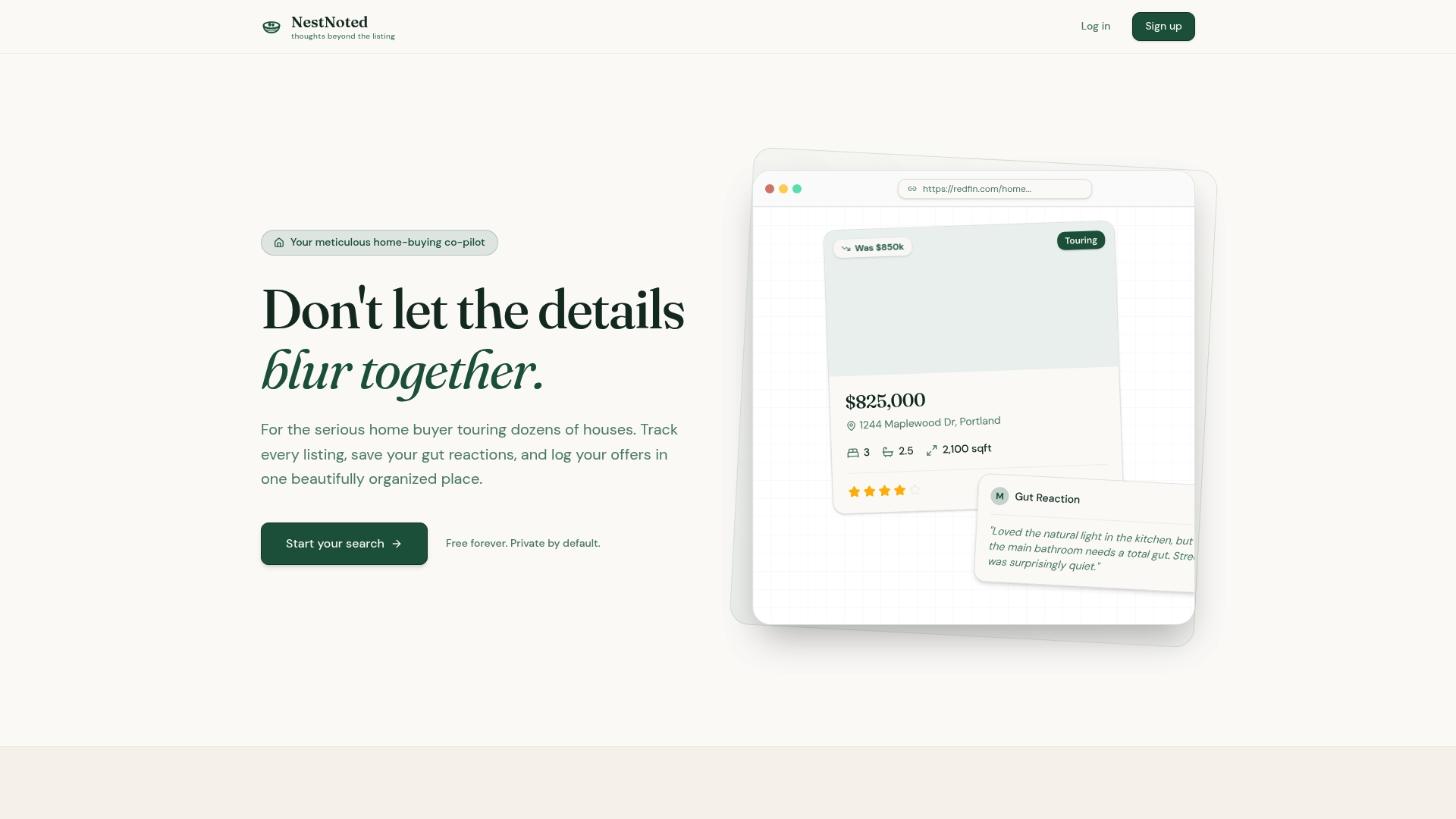
Getting started takes three steps: create a free account, import your first listing, and fill out the per-property template while it's still fresh, then set your deadline reminders before you tour the next house. If you're working with a partner or an agent, invite them into a shared workspace and decide together what stays private. Sign up at NestNoted and start your first property record before your next open house.
Sources
- Home buying process step-by-step — Amortio
- Why buyers' agents need an offer management system — RLTRsync
- Transaction coordinator software: How to manage 30+ deals without a spreadsheet — PREP Resources
- Touring homes: documentation and rating tips — Liz Walker Real Estate
FAQ
What Does "Track Home Offers" Actually Mean?
It means keeping a private, organized record of every listing you tour, your impressions of each one, and the terms of any offer you submit. The goal is replacing scattered texts and spreadsheets with one system that timestamps notes and tracks offer status through closing.
What Fields Should I Record for Every Property I Tour?
Save the address, listing ID, list price, tour date, and a mix of objective facts and subjective impressions, clearly separated. Add photos in a consistent order and a short rating on your top priorities so comparisons later take minutes instead of hours, a habit backed by research on post-tour documentation.
How Do I Compare the Loan Estimate and Closing Disclosure?
Line up the APR, origination charges, third-party fees, and total cash to close on both documents. Lenders must provide the Loan Estimate within three business days of application and the Closing Disclosure at least three business days before closing, so any unexplained jump between the two is worth questioning.
Does NestNoted Cost Anything to Use?
NestNoted's main features, including private notes, side-by-side comparisons, and the offer pipeline, are currently free to use. Current pricing details for any future premium features are available on the NestNoted site.
Should I Use a Spreadsheet or a Dedicated Tracker?
Spreadsheets work for a handful of properties, but they fall apart once you're juggling multiple active offers and deadlines. A dedicated tracker with deadline alerts and document storage reduces the errors that come with manually managing several concurrent transactions.