

What should your property viewing checklist cover?
A solid property viewing checklist does one thing above all else: it keeps your actual priorities in front of you when a beautifully staged living room is trying to distract you from the cracked foundation. HomeLight and Mortgage Research both recommend defining your non-negotiables before you walk through a single door, separating must-haves from nice-to-haves so staging tactics don't quietly rewrite your criteria mid-tour.
Here's what every serious buyer's checklist should cover:
- Structural and safety checks: foundation, roof condition, water damage, electrical panel, plumbing
- Interior functionality: appliances, storage, windows, doors, HVAC age
- Neighborhood evaluation: traffic, noise, proximity to schools and amenities
- Seller and agent questions: price history, prior repairs, disclosures, days on market
- Future cost assessment: repair estimates, system ages, renovation potential
- Emotional bias check: your gut reaction, recorded immediately after the tour
Multiple viewings matter too. Seeing a property at different times of day reveals things a single Saturday morning visit never will: rush-hour traffic on the street out front, how loud the neighbors get on a weeknight, whether natural light actually reaches the kitchen after 3 PM. Plan at least two visits for any home you're seriously considering.
Private digital tools like Nestnoted let you log all of this in one place, confidentially, so your notes stay honest and your comparisons stay organized.
Table of Contents
- What to check during each property visit
- How to organize your notes so nothing gets lost
- How Nestnoted helps you manage viewings and decisions
- What to do after your viewings
- Key Takeaways
- Nestnoted gives serious buyers a real organizational edge
What to check during each property visit
Structural and safety assessment

Foundation cracks, roof condition, and water damage are the three areas where missed problems become the most expensive post-purchase surprises. Walk the exterior before you go inside. Look at the roofline from the street: sagging ridges, missing shingles, and visible patching are all worth flagging. Check the gutters for staining on the walls below them. Inside, scan ceilings for water marks and walls for bubbling paint or white salt deposits, both of which signal moisture intrusion.
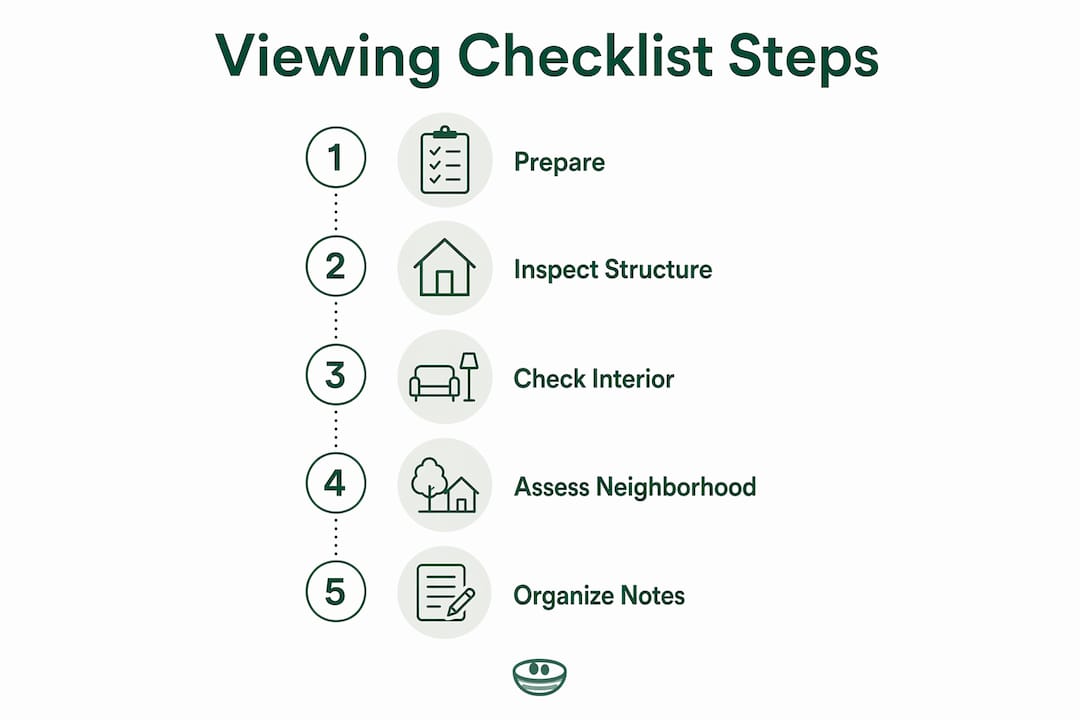
The electrical panel deserves a look too. Older fuse boxes with rewirable fuses are a red flag; modern circuit breakers with labeled breakers are what you want. Note the age of the HVAC system and water heater while you're at it.
Interior functionality
Testing appliances and checking inside cabinetry is something most buyers skip, and it's where real surprises hide. Run the dishwasher briefly. Open the oven. Check under the kitchen sink for staining or soft flooring that signals a past leak. Open every closet. Storage that looks adequate in listing photos often isn't once you're standing in it.
Work through this during each visit:
- Turn on faucets and check water pressure in kitchen and bathrooms
- Flush toilets and watch for slow drains
- Open and close every window and exterior door (sticking = settling or moisture)
- Test all light switches and visible outlets
- Check the basement or crawlspace for moisture, mold, or cracks
- Note the age of the water heater (typically labeled on the unit)
Neighborhood and timing
| What to evaluate | When to check it |
|---|---|
| Traffic volume and noise | Weekday morning and evening |
| Parking availability | Weekend evening |
| School pickup/dropoff congestion | Weekday afternoon |
| Neighborhood activity and safety | After dark |
| Proximity to amenities | Any time, but verify on foot |
Drive the neighborhood at different times, not just during the showing. What the listing describes as "quiet" may mean something very different at 7:45 AM on a Tuesday.
Questions to ask the seller or agent
Don't leave without asking these directly:
- How long has the property been on the market, and have there been prior offers?
- Has any damp treatment, roof work, or foundation repair been done?
- What's the age of the boiler or HVAC system, and when was it last serviced?
- Are there any known issues the seller is required to disclose?
- Why is the owner selling?
Homes listed for over 30 days often represent real negotiating leverage. Seller urgency tends to increase the longer a property sits, which can translate to price reductions, repair credits, or more favorable closing terms.
Pro Tip: Smart home devices and security cameras are common in occupied homes. Assume your comments during the tour may be recorded. Save candid reactions for your private notes after you leave.
How to organize your notes so nothing gets lost
Memory is unreliable, especially when you've toured eight homes in three weekends. Methodical, private note-taking is what separates buyers who make confident offers from those who second-guess themselves at the finish line.
Structure your notes by the same checklist categories every time: exterior, structural, interior, neighborhood, financials, gut reaction. Consistency across properties is what makes comparison possible later.
A few habits that actually work:
- Log impressions immediately after leaving, not that evening. Details fade within hours.
- Record your visceral reaction alongside the objective facts. Real estate agents consistently note that physical responses during a tour are authentic signals worth preserving.
- Take photos with permission, and label them by room and address before you move on to the next property.
- Note what you'd change, not just what you liked. Renovation costs add up fast, and a home that needs a new kitchen plus a roof is a different financial decision than one that's move-in ready.
- Keep your notes private. Candid observations about a home's flaws are only useful if you actually write them down. Privacy in note-taking encourages honesty that shared spreadsheets or group texts tend to suppress.
Avoid the emotional rush trap. A home that feels perfect on a first visit may look different after a second tour with a contractor or a trusted friend who wasn't swept up in the moment with you.
How Nestnoted helps you manage viewings and decisions
Nestnoted is built specifically for buyers who are tracking multiple properties at once and need their notes, impressions, and comparisons in one private place. It's not a spreadsheet workaround. It's a purpose-built tool for exactly this stage of the buying process.
Here's what the platform actually does:
- Syncs listings from Zillow and Redfin so you're not manually entering property data
- Organizes pros, cons, and offers by property in a structured format
- Side-by-side comparisons let you evaluate two or three homes against each other objectively
- Price drop alerts notify you when a property you've tracked changes in value
- Shared workspaces let you collaborate with your agent without making your notes public
- AI assistant lets you query your own property notes, useful when you're trying to remember which house had the updated electrical panel or the small backyard
The privacy-by-default model matters more than it might seem. When notes are confidential, buyers write what they actually think, not what they'd be comfortable sharing with a seller's agent or posting in a group chat. That honesty is what makes the notes useful when it's time to decide.
What to do after your viewings
Reviewing your notes consistently, rather than relying on memory or emotion, is what leads to offers you feel good about.
- Score each home against your original must-haves list, not against the other homes you've seen. Comparison shopping is useful, but a home that wins a weak field is still a weak home.
- Keep must-haves and nice-to-haves separate throughout your search. It's easy to let a feature you love quietly migrate from the nice-to-have column into the non-negotiable one.
- Plan a second visit for any serious contender, ideally at a different time of day and with someone whose judgment you trust.
- Bring a home inspector or contractor on that second visit if structural concerns came up during the first. A professional eye on a foundation crack or an aging roof can save you from a very expensive mistake.
- Use your checklist notes to shape your offer. Documented issues give you specific, defensible grounds for negotiating price reductions or repair credits.
The buyers who move through this process with the least regret are the ones who treated every viewing as a data-collection exercise, not an audition for a home they hoped to love.
Key Takeaways
A property viewing checklist works because it keeps objective criteria in front of you when emotion and staging are working against your judgment.
| Point | Details |
|---|---|
| Separate must-haves early | Define non-negotiables before touring so staging doesn't quietly shift your priorities. |
| Multiple visits reveal more | Visiting at different times of day exposes traffic, noise, and neighborhood dynamics a single showing hides. |
| Structural checks come first | Foundation, roof, water damage, and electrical panel age are the highest-cost surprises to catch early. |
| Log impressions immediately | Notes taken right after a tour are far more accurate than anything recalled hours later. |
| Nestnoted centralizes everything | Nestnoted syncs listings, organizes pros and cons, enables side-by-side comparisons, and keeps all notes private by default. |
Nestnoted gives serious buyers a real organizational edge
Tracking a dozen properties across weeks of viewings without a dedicated system means relying on memory, scattered texts, and color-coded spreadsheets that break down the moment you add a new column. Nestnoted is the alternative: a private, purpose-built real estate listing tracker that keeps every property, every impression, and every offer in one organized place.
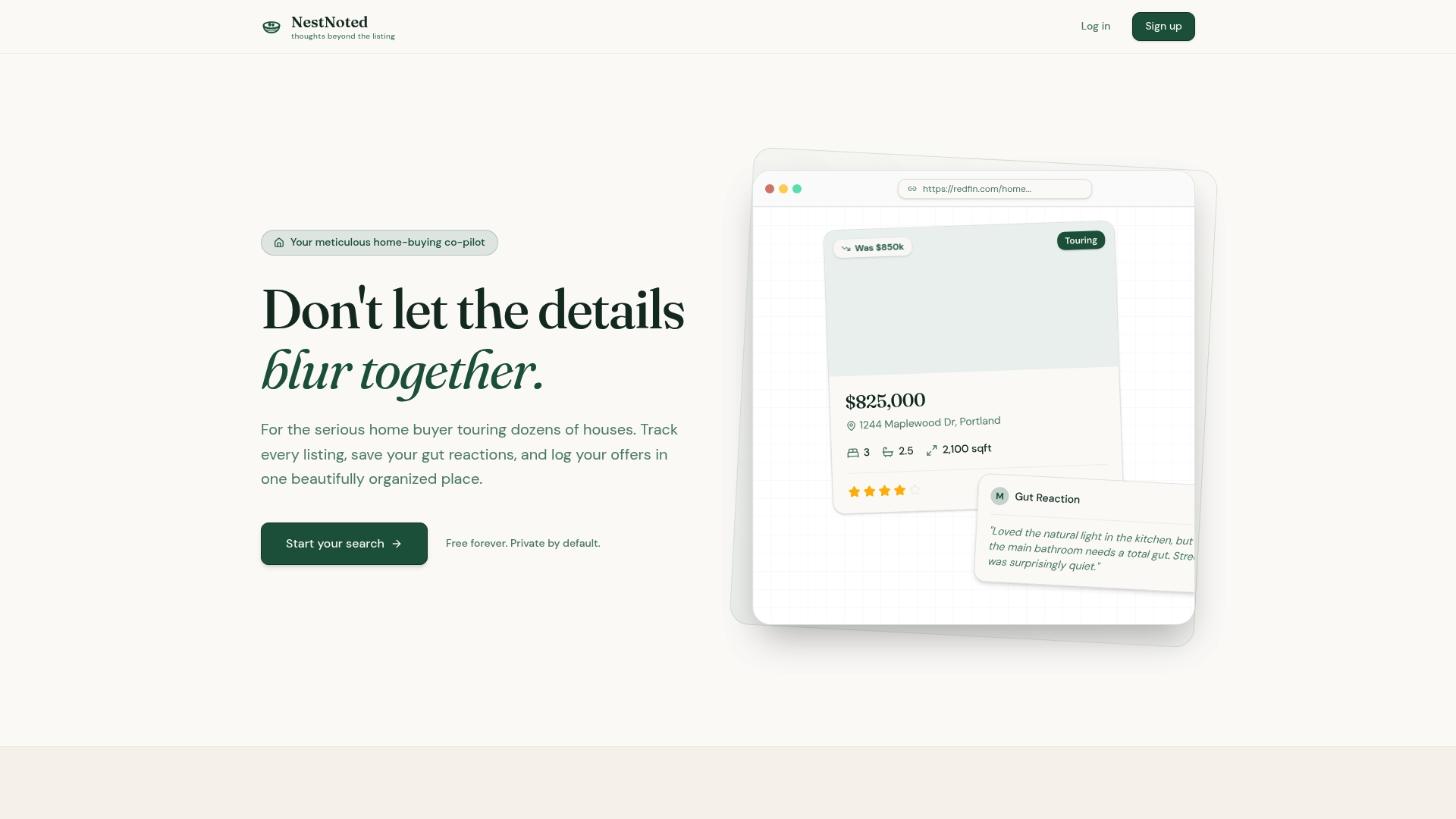
For buyers working through a competitive market, the difference between a confident offer and a hesitant one often comes down to how well you documented what you saw. Nestnoted syncs from Zillow and Redfin, supports side-by-side property comparisons, and keeps your notes confidential by default so you can write what you actually think. If you're serious about buying and you're touring more than a handful of homes, it's worth having a system that was built for this. If you're also navigating the financing side for the first time, first-time homebuyer guidance on mortgages can help you pair your viewing process with a clear financial picture.
Start organizing your search at nestnoted.com — it's free to use.