
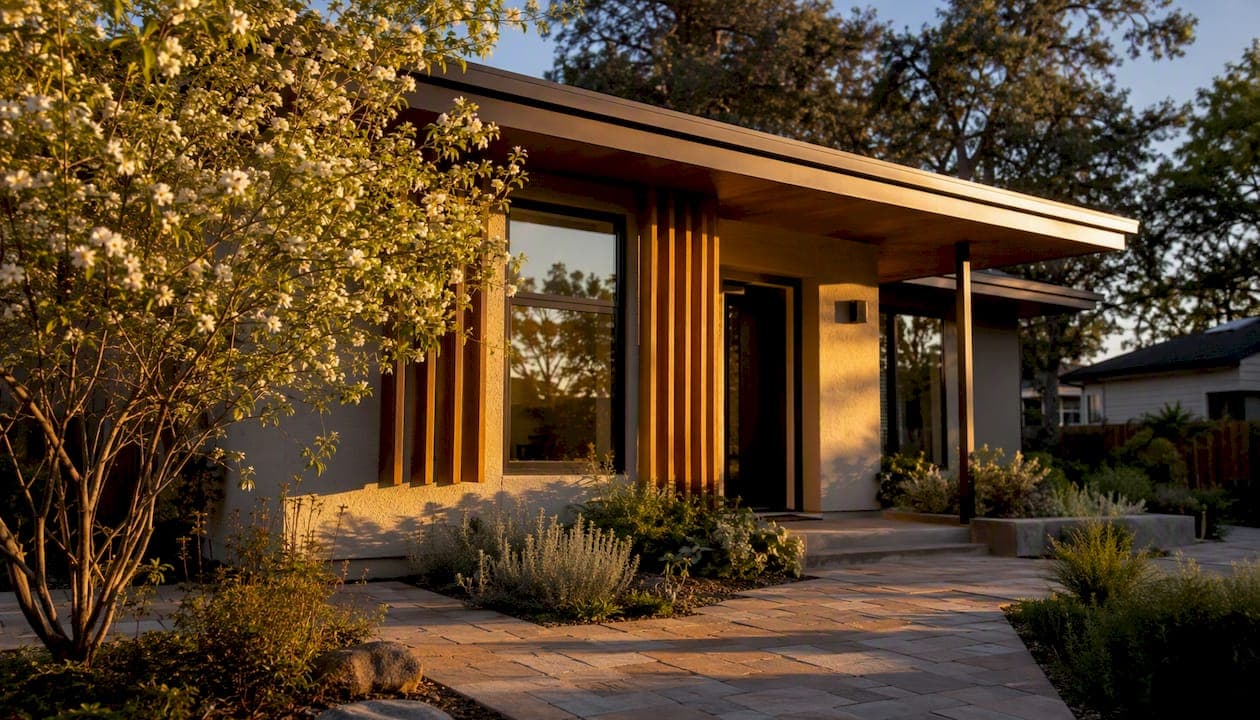
A south-facing house is not inherently bad. It trades predictable, high-volume solar exposure for a specific set of design and market tradeoffs you can manage with the right fixes. In cooler climates, that steady sun is a genuine asset. In hot ones, it means more afternoon heat and glare unless the home was built (or retrofitted) with shading, window sizing, and materials that account for it.
The Vastu stigma attached to south-facing homes in South Asian real estate markets adds another layer, but even traditional Vastu texts do not treat "south" as a flat prohibition. The rules are more specific than the folklore suggests.
Here's the quick version before you dig into the rest:
- Pro: More consistent daylight through the day, which cuts down on artificial lighting needs.
- Pro: In cold and temperate climates, passive solar gain lowers winter heating costs.
- Con: In hot climates, unshaded south windows drive up cooling loads and glare.
- Con: Cultural bias in some markets can soften demand or pricing, even when the home is well designed.
Your one move before you sign anything: check the shading on the south façade and confirm the main entrance placement, then ask whether plan-stage mitigations (overhangs, window sizing, tree cover) are already built in or still need to happen.
Key Takeaways
A south-facing house performs well when shading, window sizing, and room layout account for the sun, and the biggest resale discounts show up in markets where cultural bias, not physics, drives buyer hesitation.
| Point | Details |
|---|---|
| Verdict isn't binary | South-facing is an asset in cool climates and a liability in hot ones unless shading is already built in. |
| Six mitigations matter most | Overhangs, capped window ratios, louvres, deciduous trees, light finishes, and grading close most of the performance gap. |
| Vastu allows for nuance | Modern consultants focus on door pada placement, not a blanket rejection of south-facing entries. |
| Resale impact is local | Ask your agent for actual days-on-market and price data by orientation instead of assuming a national trend. |
| Document everything on tours | Photograph the south façade at midday and late afternoon, and score glare on a 1 to 5 scale for every showing. |
| Track it in one place | NestNoted keeps your orientation notes, photos, and comparisons private and organized across every property you tour. |
Table of Contents
- What Does "South-Facing" Actually Mean?
- Is South-Facing Bad Luck? Vastu Myths and Modern Interpretations
- How Does the Sun's Path Affect a South-Facing House?
- What Design Fixes Make a South-Facing House Comfortable?
- Vastu Room Placement Rules and Practical Alternatives
- Does South-Facing Orientation Affect Resale Value?
- Homebuyer Checklist: What to Evaluate During a South-Facing Showing
- How NestNoted Helps You Track Orientation Details Across Multiple Showings
- When Would I Choose a South-Facing House Myself?
- Keep Your Orientation Notes Organized as You Tour
- Sources
What Does "South-Facing" Actually Mean?
A house is described as south-facing based on the direction its main entrance, or sometimes its primary living-space façade, points toward. Listings usually reference the front door's orientation, not the back of the house or a random side wall, so a "south-facing" home has its main door and often its largest window bank pointing south, or close to it.
That distinction matters more than people expect. A home can have a south-facing front door but a north-facing living room if the floor plan is arranged unusually, and that changes the daylight and heat story for the rooms you'll actually spend time in.
How to confirm orientation yourself:
- Use your phone's compass app while standing at the front door, facing outward.
- Cross-check with Google Maps satellite view, which shows true north at the top of the screen so you can eyeball the lot's rotation before you even schedule a showing.
- On-site, note where the sun sits at midday. If it's roughly overhead or slightly south of overhead and hitting the front façade directly, that's a strong south orientation.
A solar-path diagram (the kind an architect or energy consultant can sketch showing the sun's arc across the sky by season) is worth requesting if you're seriously evaluating a property. It shows exactly which windows get direct summer sun versus winter sun, which is far more useful than a compass reading alone.
Is South-Facing Bad Luck? Vastu Myths and Modern Interpretations
The folk version of Vastu Shastra says south-facing homes are inauspicious, tied to Yama, the direction associated with death in Hindu cosmology. That belief still shapes buyer behavior in many South Asian markets, sometimes enough to affect price.
But that's a flattened reading of a more nuanced tradition. Vastu scholars and practicing consultants generally reject the blanket claim, pointing out that a south entrance can work well when the specific placement, known as the door's pada (a subdivision of the plot's directional grid), lands in a favorable zone.
Common myths versus what Vastu practice actually says:
- Myth: All south-facing homes bring bad fortune. Reality: The entrance's exact pada position matters more than the compass direction alone.
- Myth: South-facing is universally worse than east-facing. Reality: Some traditions consider south favorable for people in high-energy, public-facing careers, since south is associated with fame and recognition in certain schools of thought.
- Myth: No mitigation exists once a home faces south. Reality: Water placement, color choices, and room layout all offer ways to balance a south entry within Vastu frameworks.
Architectural Digest India's coverage of Vastu experts makes the point directly: south-facing homes gain real energy from the sun, and contemporary consultants push back on the idea that direction alone determines a home's fortune.
Direction alone doesn't decide a home's fate. What matters is where exactly the entrance falls within the plot's grid, and how the rest of the layout responds to that placement. A south door in the right pada, paired with sensible room planning, is treated very differently from a poorly placed one.
The caveat worth remembering: Vastu interpretation varies by region, by family tradition, and by which school of thought a consultant follows. Two Vastu practitioners can look at the same floor plan and give different verdicts. If cultural fit matters to you or your family, it's worth consulting someone whose specific tradition you trust rather than treating any single online guide as universal doctrine.
How Does the Sun's Path Affect a South-Facing House?
At mid-latitudes (most of the continental United States falls here), a south-facing façade receives more cumulative solar radiation over the course of a year than a north, east, or west-facing wall. That's a function of geometry, not superstition. The sun tracks across the southern sky for most of the day, so a south wall stays in direct light longer than walls facing other directions.
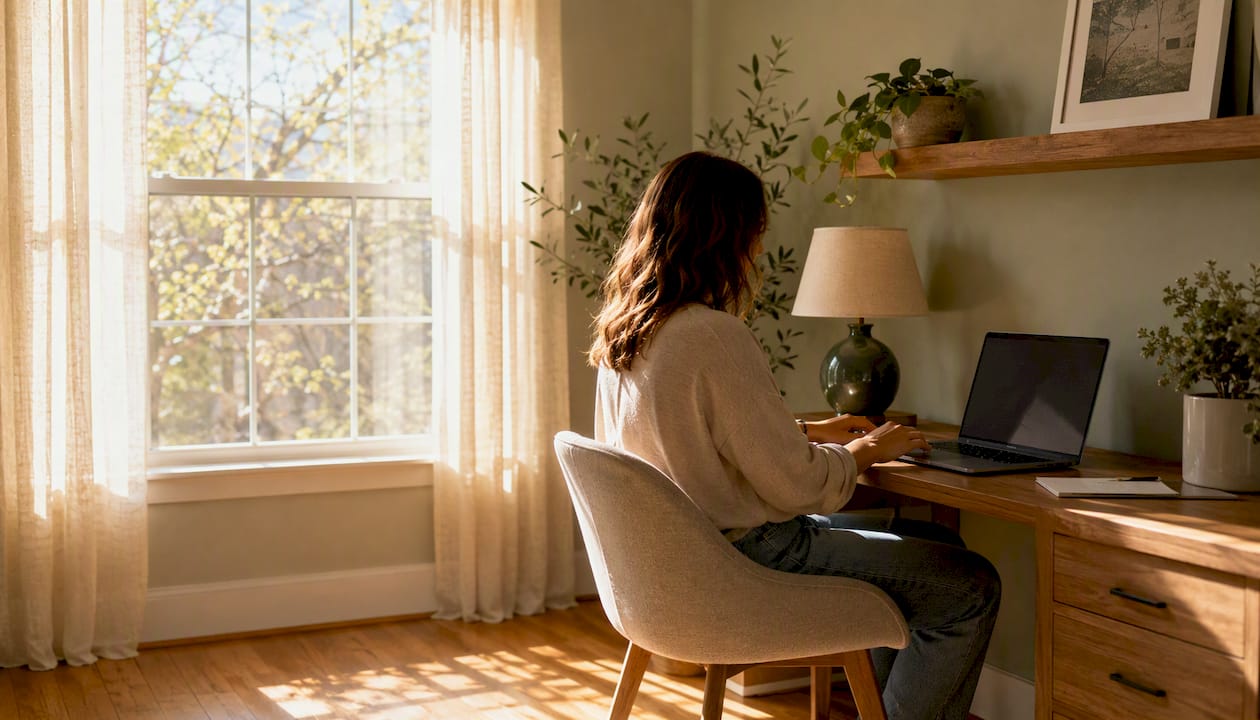
Seasonal timing changes what that exposure feels like. In winter, the sun sits low in the southern sky, so its rays angle deep into south-facing windows, producing strong passive heating exactly when you want it. In summer, the sun climbs higher overhead, and a well-designed overhang can block much of that high-angle summer sun while still letting in the lower winter sun. Without that overhang, summer afternoons on a south façade get intense, with direct glare and heat gain that no amount of air conditioning fully offsets comfortably.
BobVila's comparison of home orientations confirms that south and east-facing homes generally receive the most sunlight of the four cardinal directions, with south delivering the most consistent exposure across the full day rather than concentrated morning or afternoon light.
Climate changes the verdict:
- Cool and temperate climates: South exposure is a clear asset. Passive solar gain reduces heating bills, and the extra daylight offsets the loss of sun during shorter winter days.
- Hot and arid climates: South exposure raises cooling demand unless shading is deliberate. Homes in places like Phoenix or inland Texas need the mitigations covered in the next section far more urgently than a house in Minneapolis.
If you can get your hands on a solar-path diagram for the specific lot, even a rough one, it tells you far more than a general climate rule. Two houses ten miles apart can have very different exposure depending on nearby trees, neighboring structures, and lot grading.
What Design Fixes Make a South-Facing House Comfortable?
A disciplined set of architectural moves brings a south-facing home's cooling load close to parity with an east-facing equivalent, and buyers who verify these details often negotiate a better price precisely because most shoppers don't know to check for them.
Studio Matrx's analysis of south-facing design documents six specific mitigations that, together, close most of the performance gap: deep horizontal overhangs, a capped window-to-wall ratio on the south side, vertical louvres or shading fins, strategic deciduous tree placement, light-colored exterior finishes, and thoughtful plot grading. Applied together, these measures bring annual cooling load within roughly 5 to 8 percent of an equivalent east-facing design, and builders in some markets price south-facing plots lower to begin with, which can translate into a real discount once mitigation costs are factored in.
The six mitigations, ranked by what they typically cost versus how much they help:
| Mitigation | Cost Category | Effectiveness |
|---|---|---|
| Deep horizontal overhangs / chajjas | Low to medium | High |
| Capped south window-to-wall ratio | Low (at design stage) | High |
| Vertical louvres or shading fins | Medium | Medium to high |
| Deciduous tree placement | Low | Medium |
| Light-colored exterior finishes | Low | Medium |
| Plot grading and orientation adjustments | High (retrofit) | Medium |
Overhangs and window sizing are the best value if you're negotiating with a builder or evaluating a plan pre-construction, since they cost little at the design stage but get expensive to retrofit after the walls are up. Grading adjustments sit at the other end: they're expensive to change after the fact, so they matter most as a pre-purchase inspection item rather than a later fix.
Pro Tip: A simple rule of thumb for sizing a south-facing overhang: for every foot the window sits below the overhang, extend the overhang roughly half a foot outward. That ratio blocks high summer sun while still letting in the lower winter sun that provides passive heating. It's not a substitute for an architect's calculation, but it's a fast gut-check you can do standing in the driveway.
Vastu Room Placement Rules and Practical Alternatives
Beyond the entrance debate, Vastu tradition has specific guidance for where rooms should sit within a south-facing plot. The most commonly cited rules place the kitchen in the southeast corner, bedrooms in the southwest, the pooja or prayer space in the northeast, and water tanks away from the south entirely. UltraTech's guide to south-facing Vastu lays out these placements alongside guidance to favor light colors and avoid heavy trees that block the entrance.
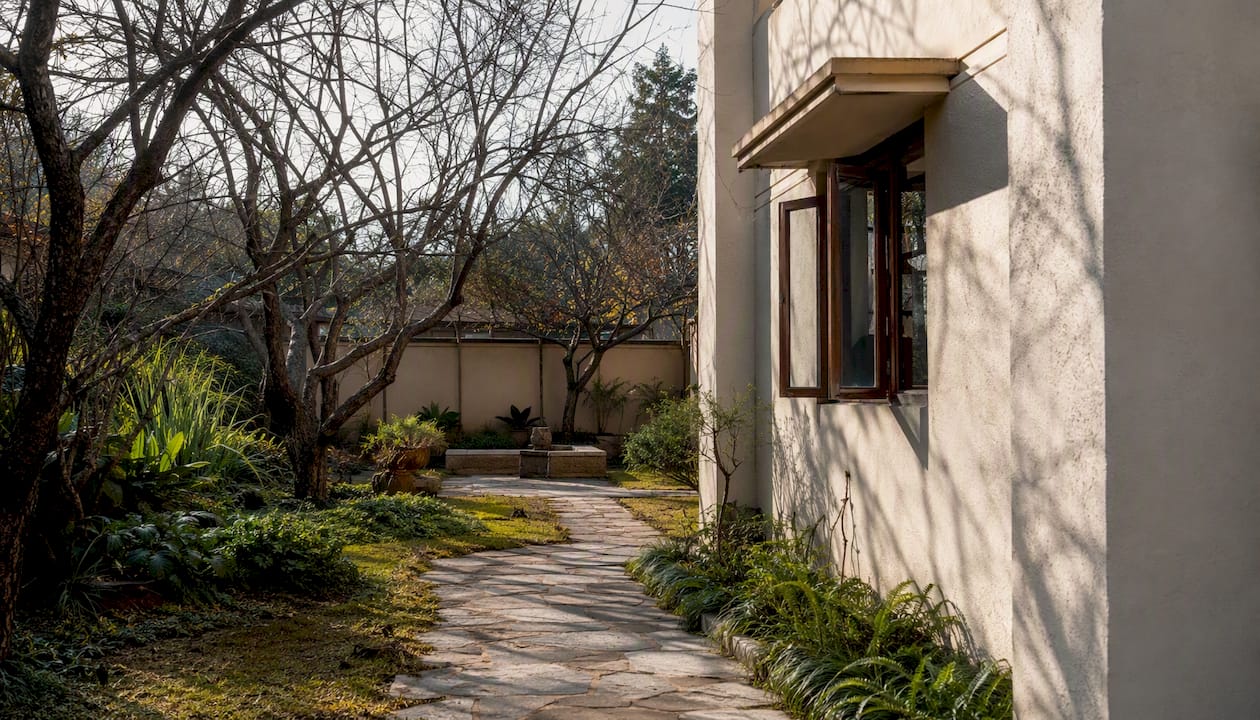
You don't need to follow Vastu to benefit from the underlying logic, though. Many of these rules map onto sound, secular design principles once you translate them.
Non-religious versions of the same goals:
- Instead of "bedrooms in the southwest" for Vastu reasons, aim to keep bedrooms away from direct western afternoon glare, which disrupts sleep regardless of which tradition you follow. The Sleep Foundation's research on light and sleep notes that the timing and intensity of light exposure affects circadian rhythm, so a bedroom that bakes in harsh afternoon sun can genuinely degrade sleep quality.
- Instead of a strict pada rule for the entrance, use a vestibule or covered porch as a buffer zone between the south door and interior living space. It cuts heat transfer and glare while doubling as a mudroom.
- Instead of a fixed kitchen orientation, prioritize ventilation and morning light for the kitchen, since cooking heat plus direct south sun can make a kitchen uncomfortably warm by midday.
Pro Tip: When you're walking a floor plan, don't just ask "where's the kitchen?" Ask which direction the kitchen windows face and whether there's cross-ventilation. That single question tells you more about daily comfort than knowing the compass bearing of the whole house.
Quick dos and don'ts for the showing:
- Do check whether bedrooms have any shading or overhang on south or west-facing windows.
- Do ask if there's a vestibule or transition space at a south-facing main entrance.
- Don't assume a listing photo taken in the morning represents the room's afternoon heat and glare.
- Don't skip asking about tree cover history. Removed mature trees can quietly turn a once-shaded south room into a hot box.
Does South-Facing Orientation Affect Resale Value?
Orientation-based price effects are market-specific, and they're driven far more by local cultural preference than by physics. In markets with a strong Vastu-conscious buyer base, south-facing homes can sit longer or sell at a modest discount. In markets without that cultural lens, orientation barely registers as a price factor at all, and buyers care more about lot size, school districts, or proximity to transit.
That said, treat any specific resale claim with caution. Much of what circulates about south-facing homes selling slower is anecdotal, repeated across real estate blogs without hard local data behind it. The right move is to ask your agent for actual numbers rather than assume a national pattern applies to your neighborhood.
Questions worth asking a listing agent:
- What have comparable south-facing homes in this specific neighborhood sold for in the last 12 to 24 months, compared to similar east or north-facing homes?
- How many days on market did recent south-facing listings take compared to the neighborhood average?
- Is there a specific buyer demographic in this area that factors orientation into their decision, and does that show up in offer volume?
Online valuation tools are a reasonable starting point for sanity-checking any price gap. Bankrate's comparison of home value estimator tools points out that these tools carry measurable error margins and work best as a first pass, not a final word. Zillow's Zestimate is a free option worth checking, but pair it with a local comparative market analysis from an agent who actually knows how orientation plays in that specific zip code before you factor any discount into your offer.
Homebuyer Checklist: What to Evaluate During a South-Facing Showing
Bring this list on your next tour, whether or not the listing explicitly flags orientation:
- Confirm the azimuth. Use your phone compass at the front door and note the reading.
- Photograph the south façade twice. Once around midday, once in late afternoon, to capture how light and shadow shift.
- Note existing shading. Overhangs, trees, neighboring structures, anything that blocks direct sun on south-facing windows.
- Rate afternoon glare and overheating on a 1 to 5 scale. Stand in the main south-facing room in the late afternoon if the showing time allows, and note how hot or bright it feels.
- Estimate the window-to-wall ratio on the south side. A wall that's mostly glass with no shading is a bigger flag than a wall with modest windows.
- Check bedroom placement relative to west and south exposure. Flag any primary bedroom that takes direct late-day sun with no mitigation.
- Ask about tree history and HOA rules on landscaping. Some HOAs restrict tree planting, which limits your ability to add shading later.
- Score the property and note negotiation points. If you find unmitigated south exposure, that's leverage for a price discussion or a request for seller-side fixes.
Do this consistently across every home you tour, not just the ones that feel obviously sunny, since orientation issues aren't always visible in listing photos.
How NestNoted Helps You Track Orientation Details Across Multiple Showings
Running this checklist on one house is manageable. Running it on the eighth house you've toured in three weeks, while also trying to remember whether it was house four or house six that had the better southeast kitchen light, is a different problem entirely.
That's the exact gap NestNoted was built to close. It gives you a private workspace to log photos, notes, and impressions for every property you tour, so orientation-specific details like glare ratings, shading photos, and window-to-wall estimates stay attached to the right house instead of scattered across text threads and camera rolls.
Features that map directly onto the checklist above:
- Photo notes tied to each listing, so your midday and late-afternoon façade shots stay organized by property.
- Side-by-side comparisons, useful for putting a south-facing home's glare score next to an east-facing alternative before you make an offer.
- Private impressions by default, so you can write candidly about a home's flaws without worrying about anyone but you and your agent seeing it.
- Shared workspaces for collaborating with your agent on orientation notes and negotiation strategy.
- Offer tracking, so once you've decided a south-facing home clears your mitigation bar, you can log the offer and terms in the same place as your notes.
A simple workflow looks like this: tour the home, log your azimuth reading and glare score immediately in NestNoted, attach your façade photos, flag any missing mitigations as negotiation points, then pull up the comparison view against the other homes on your shortlist before you decide whether to write an offer.
When Would I Choose a South-Facing House Myself?
I'd accept a south-facing house without hesitation if it already has real shading on the south windows, a window-to-wall ratio that isn't oversized, and a floor plan that keeps bedrooms out of direct late-afternoon glare. Those three things tell me the original design already accounted for the sun, which means I'm not paying to retrofit someone else's oversight.
Where I get cautious is a south-facing home with floor-to-ceiling glass and zero overhang, in a hot climate, priced the same as a comparable east-facing home nearby. That's a home asking me to absorb both the retrofit cost and the comfort tradeoff with nothing in return.
My rule of thumb: I'll take a south-facing house over an east-facing one if it clears the shading and window-ratio checklist above, and the price sits at least 5 to 10 percent below a comparable east-facing property in the same neighborhood, roughly in line with the discount pattern Studio Matrx documented in its market analysis. Below that discount, I'd rather pay full price for orientation that doesn't need any correcting.
Keep Your Orientation Notes Organized as You Tour
Every item on the checklist above only helps you if you can actually find it again when you're comparing five houses at 9 p.m. after a long weekend of showings. Most buyers end up with a mess of texted photos, half-finished notes apps, and a spreadsheet that falls apart by the third property.
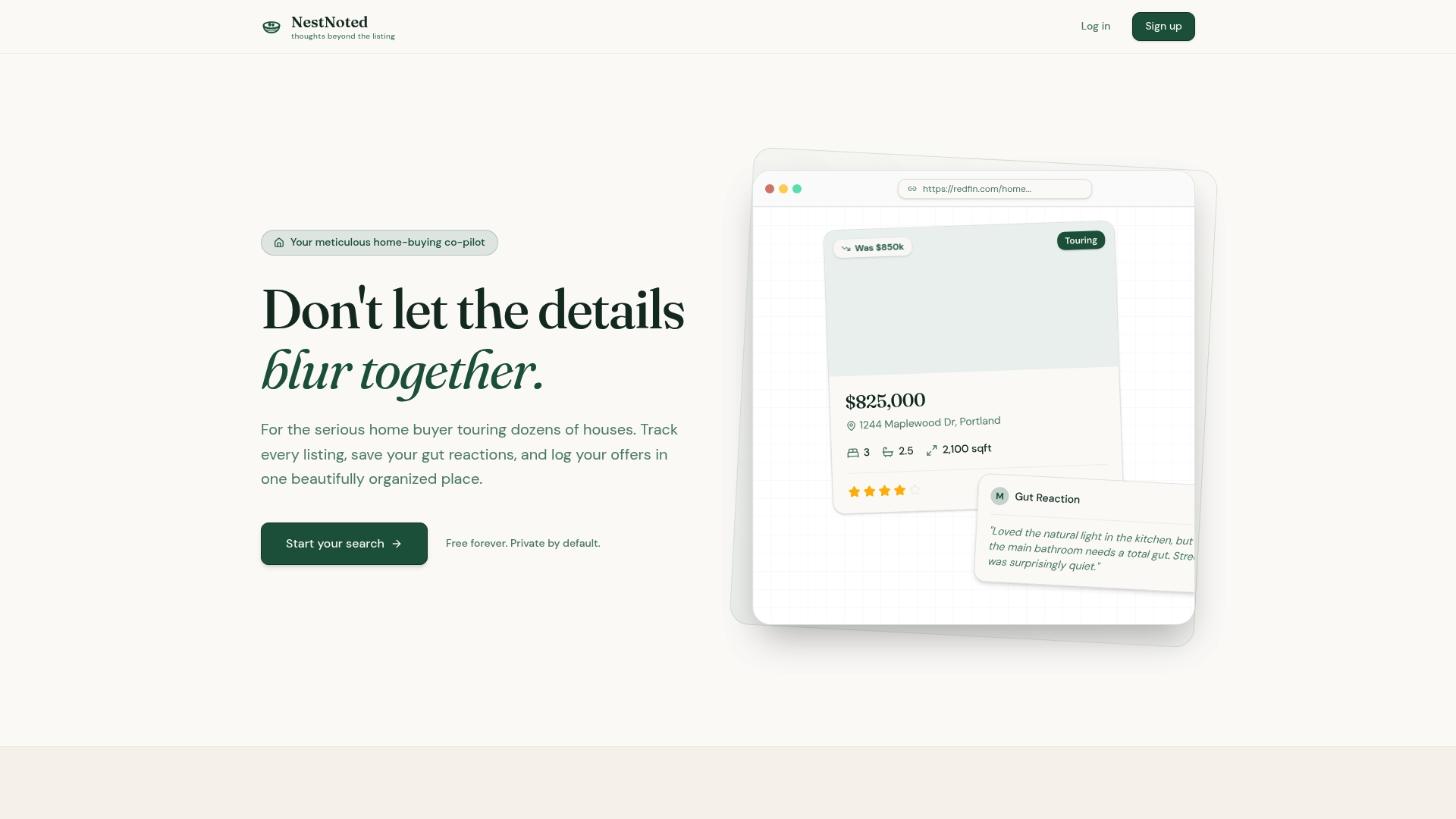
NestNoted gives you a private place to log every south-facing detail as you go: your compass reading, your midday and afternoon glare photos, your window-to-wall estimate, and your gut reaction to how the kitchen felt at 4 p.m. Everything stays attached to the right property, and it's kept private by default so you can be honest in your notes without worrying who sees them. When you've narrowed things down, the side-by-side comparison feature lets you put your south-facing candidate next to an east-facing alternative and see exactly how they stack up on the points that matter to you.
Once you've decided a home clears your bar, track your offer in the same workspace where all your notes already live. The core tool is free to use, no credit card required, so there's no reason to keep juggling texts and spreadsheets on your next round of showings.
Sources
- South-Facing House Design in India — The Feared Orientation, Decoded — Sun-Path Physics, Six Mitigations, Reference Plan, Market Math & Vastu Reality | Studio Matrx
- South-facing house Vastu: Experts share how this direction gains energy from the sun | Architectural Digest India
- Best Direction for Your Home to Face: North, South, East, or ... | BobVila
- Light and sleep | Sleep Foundation
- Best Online Home Value Estimator Tools Compared | Bankrate