

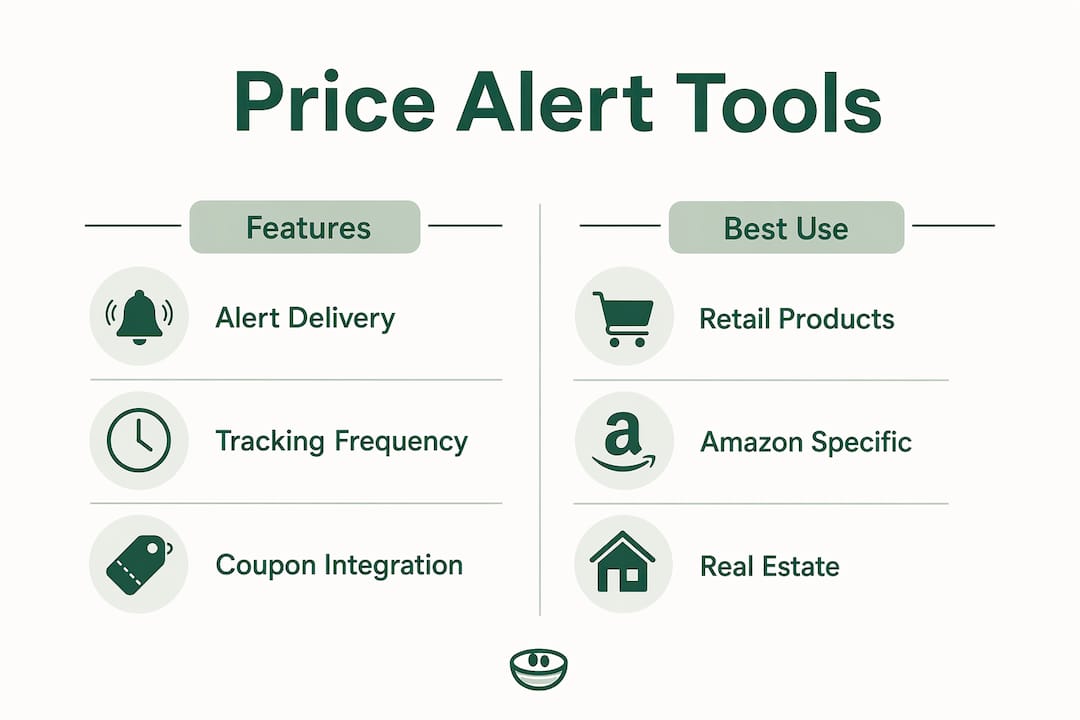
Price drop alerts are automated notifications sent to you the moment a product's price falls below a threshold you set. No more refreshing product pages daily or missing a 48-hour flash sale. Tools scan retail pages at intervals ranging from every 5 to 60 minutes and fire off a notification the second your target price hits. One quick note on scope: these are retail product alerts, not stock market price alerts. The mechanics overlap, but the tools and use cases are entirely different.
How alerts reach you depends on the tool:
- Email: The most common delivery method, available on nearly every tracker
- Browser push notifications: Instant alerts without opening your inbox
- App push notifications: Useful for mobile-first shoppers
- SMS, Slack, or MS Teams: Available on enterprise-grade tools like Visualping
How do you set up price drop alerts?
Setup takes under two minutes on most tools. Paste a product URL into a tracker like UptimeRobot or PricePeek, highlight the price element on the page, enter your email, and you're done. Browser extensions like PriceDropCatch or Honey's Droplist work slightly differently: install the extension, browse to the product page, and click "Track." No account required on several of them.
A few things to decide before you start:
- Notification frequency: How often do you want to hear from the tool? Daily digests work for patient shoppers; instant alerts suit flash-sale hunters.
- Price threshold: Set a specific target price, not just "any drop." A $1 dip on a $300 TV isn't worth your attention.
- Delivery method: Email is reliable but slower. Browser push is faster but requires your browser to stay open.
Managing your alert list matters as much as setting it up. Tracking 40 products at once leads to alert fatigue fast. Keep your active list to items you'd actually buy this week.
Pro Tip: Before you buy anything an alert flags, cross-check the deal against a community platform like Slickdeals. Alerts tell you the price dropped; Slickdeals tells you whether it's actually a good price.
Privacy is worth a quick look too. Some free trackers use aggregate browsing data to build their pricing databases. Read the privacy policy before connecting a tool to your main browser profile, or use a dedicated browser profile for price tracking.
Which price drop alert tools are worth using in 2026?
The market has several solid options, and the right one depends on what you're tracking and how much automation you want.
| Tool | Alert delivery | Tracking frequency | Key features | Best for | Rating |
|---|---|---|---|---|---|
| Visualping | Email, SMS, Slack, MS Teams, API | Configurable | AI importance assessment, team collaboration, highlighted change reports | Teams and power users | 4.3★ (11 reviews) |
| UptimeRobot | Every 5 min | Up to 50 pages free, no install needed | Free, no-fuss monitoring | — | |
| PriceDropCatch | Browser push | 15 min–60 min | Price history, custom targets, no account needed | Privacy-focused shoppers | — |
| SnagSignal | Email, push | Real-time scan | Deal Proof Score, coupon verification, unlimited alerts | Deal hunters wanting verified savings | — |
| camelcamelcamel | Daily | Amazon price history charts, price watches | Amazon-specific tracking | — |
Visualping stands out for anyone who needs more than a simple email ping. Trusted by over 2 million users and used by 85% of Fortune 500 companies, it monitors any public webpage for changes, not just price fields. Its AI-based importance assessment filters out noise, flagging only changes that actually matter. Teams can collaborate inside the platform, and integrations with Slack and MS Teams mean alerts land where your team already works. It's recognized on G2 and offers API access for custom workflows.
UptimeRobot's free price tracking tool monitors up to 50 pages with checks frequently every few minutes and requires no installation. Paste a URL, highlight the price, add your email. That's the whole setup.

SnagSignal goes further than a simple price check. It scans price histories, verifies stackable coupons, and includes a Deal Proof Score that accounts for fees and confidence level. Unlimited alerts with priority email delivery run on a monthly subscription at $6.99/mo.
camelcamelcamel remains the go-to for Amazon-specific tracking. Amazon itself does not offer a universal price drop alert natively, so third-party tools fill that gap. camelcamelcamel's price history charts let you see whether today's "sale" is actually the product's normal price.
Tips for getting the most out of price change notifications
The alert is just the starting point. What you do next determines whether you actually save money.
- Check price history before buying. A 20% discount off last week's inflated price isn't a deal. Tools that include historical price data help you spot genuine drops versus manufactured urgency.
- Stack verified coupons on top of alerted prices. Combining alerts with coupon verification is where real savings compound. SnagSignal does this automatically; for other tools, check Slickdeals or RetailMeNot manually.
- Verify the price in your own session. Retailers personalize prices based on cookies, location, and login status. The price a monitoring bot sees may differ from what you see when you click through.
- Keep browser-based trackers running. Browser extensions pause when you close the browser. If you're hunting a flash sale, leave the browser open or switch to a cloud-based tool like Visualping or UptimeRobot.
Pro Tip: Set your target price at least 10–15% below the current listed price. Alerts set too close to the current price fire constantly on minor fluctuations and train you to ignore them.
Nestnoted tracks price drops on homes, not just products
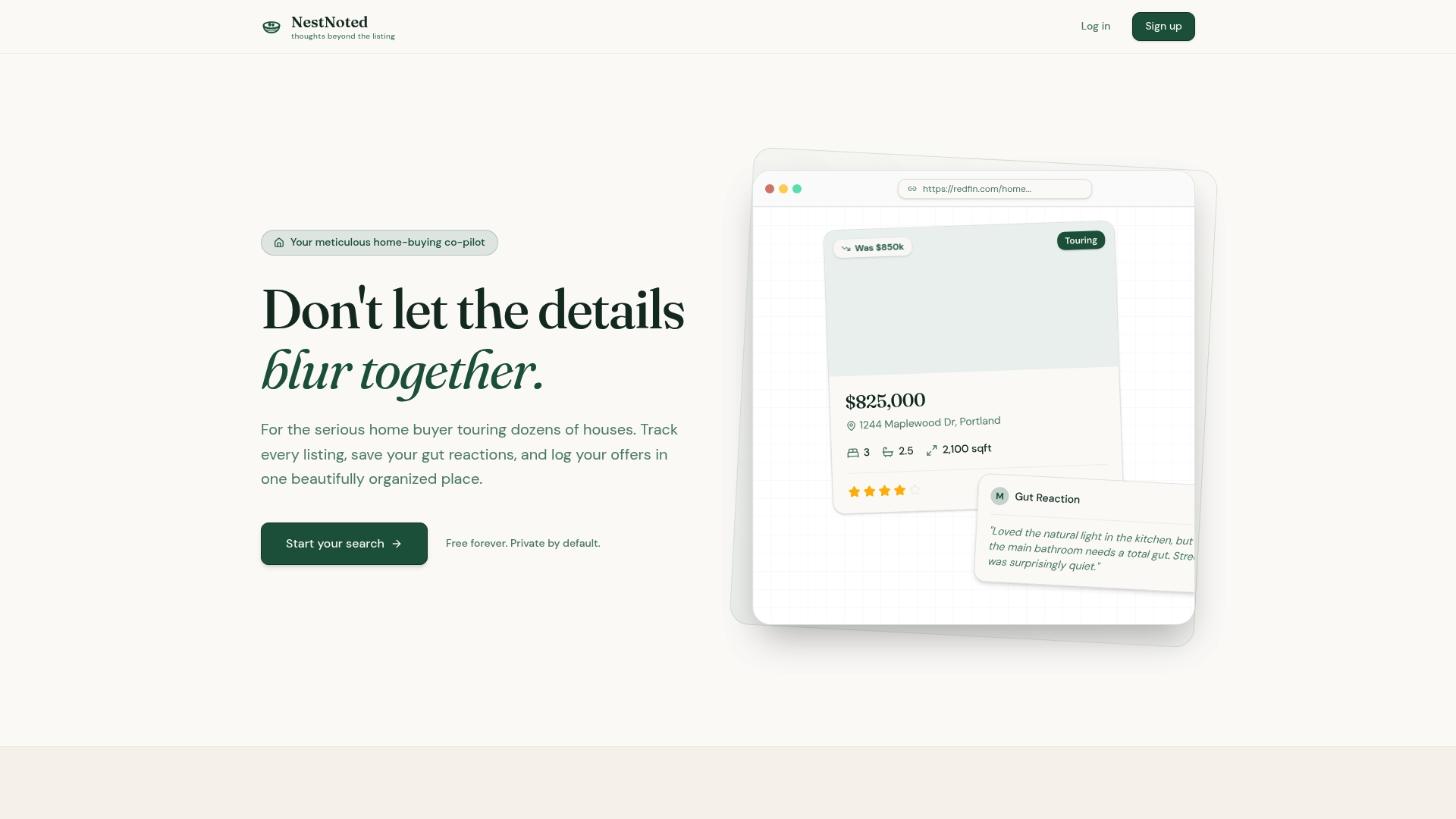
The tools above cover retail products well. But if you're also tracking real estate listings, the same alert fatigue and missed-drop problems apply, and spreadsheets don't solve them. Nestnoted is a free property management tool built for home buyers who want to track listings, log impressions, and get notified when prices drop on homes they've toured. It syncs with Zillow and Redfin, keeps all your notes private by default, and lets you compare properties side by side. Think of it as the camelcamelcamel for your home search, without the public exposure. If you're house hunting alongside your deal hunting, it's worth a look.

Key Takeaways
Price drop alerts work best when you pair automated monitoring with manual price history checks before buying.
| Point | Details |
|---|---|
| How alerts work | Tools scan product pages every 5–60 minutes and notify you by email, push, or SMS when your target price hits. |
| Setup is fast | Paste a URL into a tracker or install a browser extension; most tools are free and require no account. |
| Verify before buying | Retailers personalize prices by location and login status, so always confirm the alerted price in your own session. |
| Browser trackers need to stay open | Closing your browser pauses monitoring; use a cloud-based tool for reliable coverage of time-sensitive deals. |
| Nestnoted for home buyers | Nestnoted applies the same alert logic to real estate listings, tracking price drops on homes with full privacy. |